Gisborough Priory is cared for by English Heritage and a local charity, Gisborough Priory Project. Its peaceful presence situated on the edge of the busy market town of Guisborough (that is not a typo, the two names are different) offers an escape into a tranquil space.
The priory’s name originates from the Old Norse origin, whereas the town’s name derives from the Domesday book entry – the town of ‘Gighesbore’.
Stepping inside the well-tended grounds is like entering a timeless sanctuary that has been lovingly preserved, providing a place of peace and reflection. I was surprised and delighted that this free-to-enter space is obviously a much used and cared for relic from the past, yet it is accessible to travellers today.
The Augustinian priory of St Mary the Virgin was founded by Robert de Brus in 1119. Its success led to the establishment of Guisborough as a thriving market town. In 1540 the dissolution of the monasteries under Henry VIII’s reign ended the priory’s power and control.
In my novels and novellas I created the fictitious towns of Gorebeck and Beckton, which were strongly influenced by such beautiful Yorkshire market towns as Guisborough. In the period when the Napoleonic Wars (1803-1815) raged overseas taking many menfolk to enlist for the King’s shilling and also to serve in HMS Navy, either by choice or pressgang, the lives of their families and loved ones were deeply affected back home. Trade was disrupted, taxes were high leading to smuggling – which was rife in the area, the costs of farming and grain rose, and of course men were away at war. Unrest, fear and tough times would be the reality for the many, whilst the landed gentry and ‘new money’ were still the relatively few who thrived in the country.
My stories reflect some of the issues of the day and the struggles that a country in the midst of war and social, industrial and religious change faced.
In Silent Revenge, Lord Farrington, a returning officer for Lord Wellington is asked by the Home Office to gather intelligence on local insurgents, lest uprisings happen in England like they did in France.
Goods, legal and contraband were brought to market vis such ancient routes as The Quaker’s Causeway, an ancient trod dating back to monastic times when Gisborough Priory was connected to Commondale.
“Parthena looked at her and decided to tell the truth — almost. “I walked over the old trods from Gorebeck to Beckton. I was at the Abbey School as a child and crossed the moors when the supplies were taken to market. I’d remembered it from back then. The school does not exist now, but the trods have existed for centuries.”
I hope you have enjoyed the sunshine and warmth of June, when the UK sampled temperatures nearing those in the tropics! In North Yorkshire the heather is ready to bloom, bringing swathes of lush purple to the vast expanses of moorland. It is a truly beautiful and everchanging landscape.
Another beautiful county that I visited recently in the South West of England was Somerset. When I stopped at a garden centre I came across a working blacksmiths’ forge and felt as though I’d taken a step back in time. Instantly thoughts of Wilfred Underwood, Imogen’s father in Secrets, came to mind. Although we tend to think of smithing as a traditional craft of yesteryear, the charming owner soon corrected that impression.
There is still a demand for the old skills, used now for restoration work, preserving items from the past. This requires the mastery of the trade and knowledge of old methods, material, tools and skillset of the original worker to recreate or mend the item in question. Past imperfections are what makes an old item interesting today.
We live in a time where we have more technical accuracy and, perhaps as a consequence, less individuality. Science has moved on, providing precision tools and improved understanding of the process, yet a modern day blacksmith has to embrace and learn the old ways as well as the new.
Old skills are called upon to mend traditional machines and objects, some still used in other local trades like the local butcher’s grinder, along with reproducing such basic items as the imperfect nails made at a smithy’s before mass production. Each repair has to be done in the style and materials of that bygone age, but today’s Blacksmith also has to build on this historic knowledge by keeping up to date with modern, contemporary designs changes in style, tools, markets and techniques.
There is a long apprenticeship still required, for this labour of love, as science and art combine.
Historically, a chestnut tree was planted near the large forecourt providing shade and was symbolically associated with the trade. Yorkshire wrought iron was and is highly prized for its quality.
In Secrets Imogen’s father, Wilfred Underwood, is the blacksmith for my fictitious village of Dibbledale – a tranquil unspoilt place inspired by such villages as Hutton-le-Hole in the North Yorkshire Moors Park. His trade was central to the local community for the upkeep of agricultural equipment, as a farrier, and the many other jobs concerning the mending of household and trade goods. Wilfred, a gentle giant of a man, also encouraged Imogen’s creative nature providing her with fine tools and wire to make delicate jewellery, deepening the bond between father and daughter.
“Secrets and their consequences worm their way between Micah and Imogen.Will they be able to save Dibbledale’s peace and tranquillity?Only when secrets are revealed can devoted friends be distinguished from destructive foes and allow love to find its true home.“
From a writing perspective there is a fine balance between keeping historical fiction accurate to the period it is written about, and accessible to a modern reader, who may be unfamiliar with that period of history.
Trades, like everyday language, evolve and adapt through time. The visual importance and need of a central blacksmith may have changed, but in Regency they were essential and central to a thriving village community. They were also excellently placed to see and hear all the comings and goings of the villagers and pick up information from travellers who crossed their paths. Wilfred as a character is able to keep his finger on the pulse of local events.
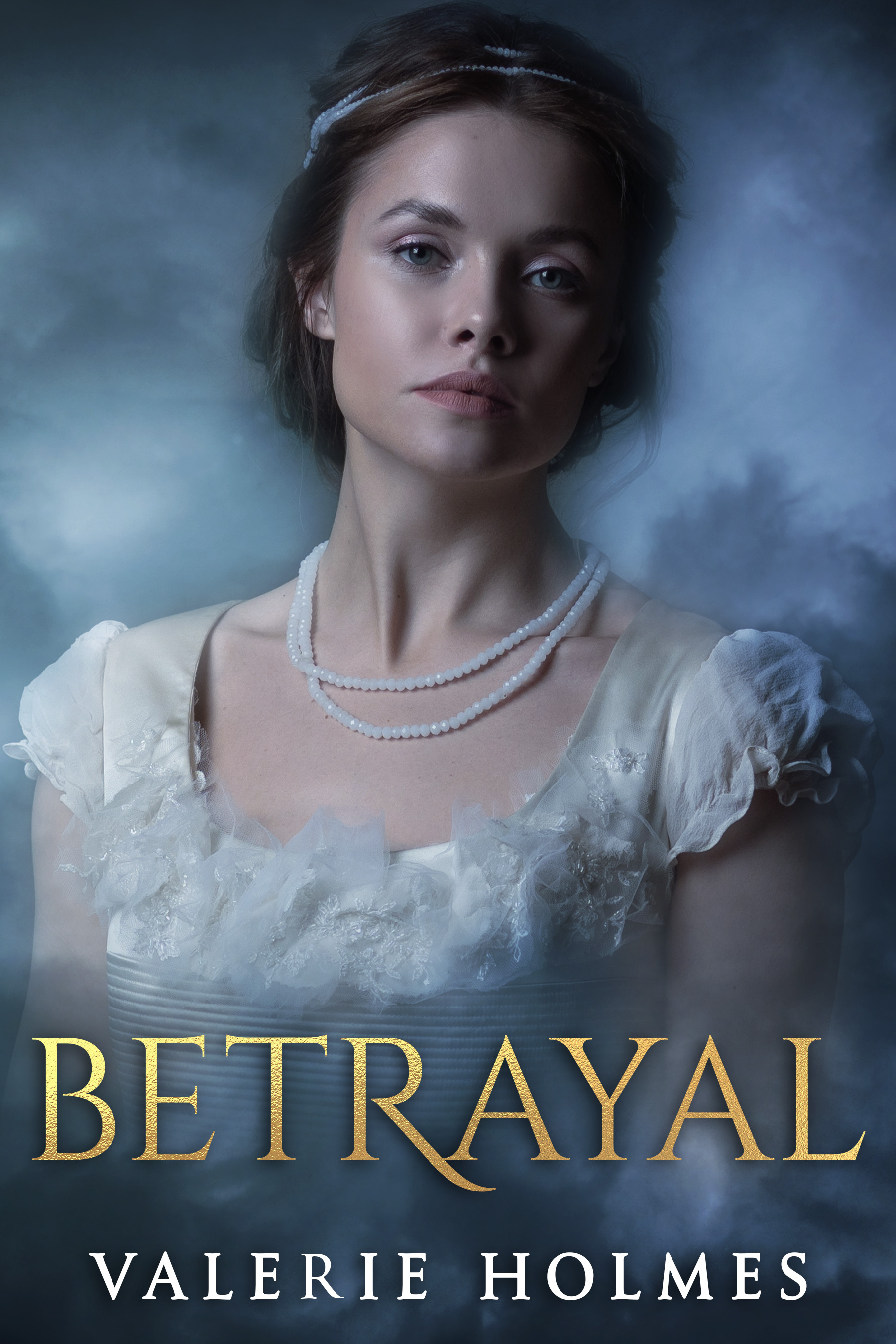
I would like to greet and thank my new readers in the United States as well as the UK and Australia who have read and enjoyed Betrayal – Book 1 of Friends and Foes Regency romantic adventure series. The
I hope you go on to read the completed trilogy and discover what happens to Lord Farrington, an enigmatic character who features in Book 3 Silent Revenge , which will be published in paperback on 5th July. More about him next time!
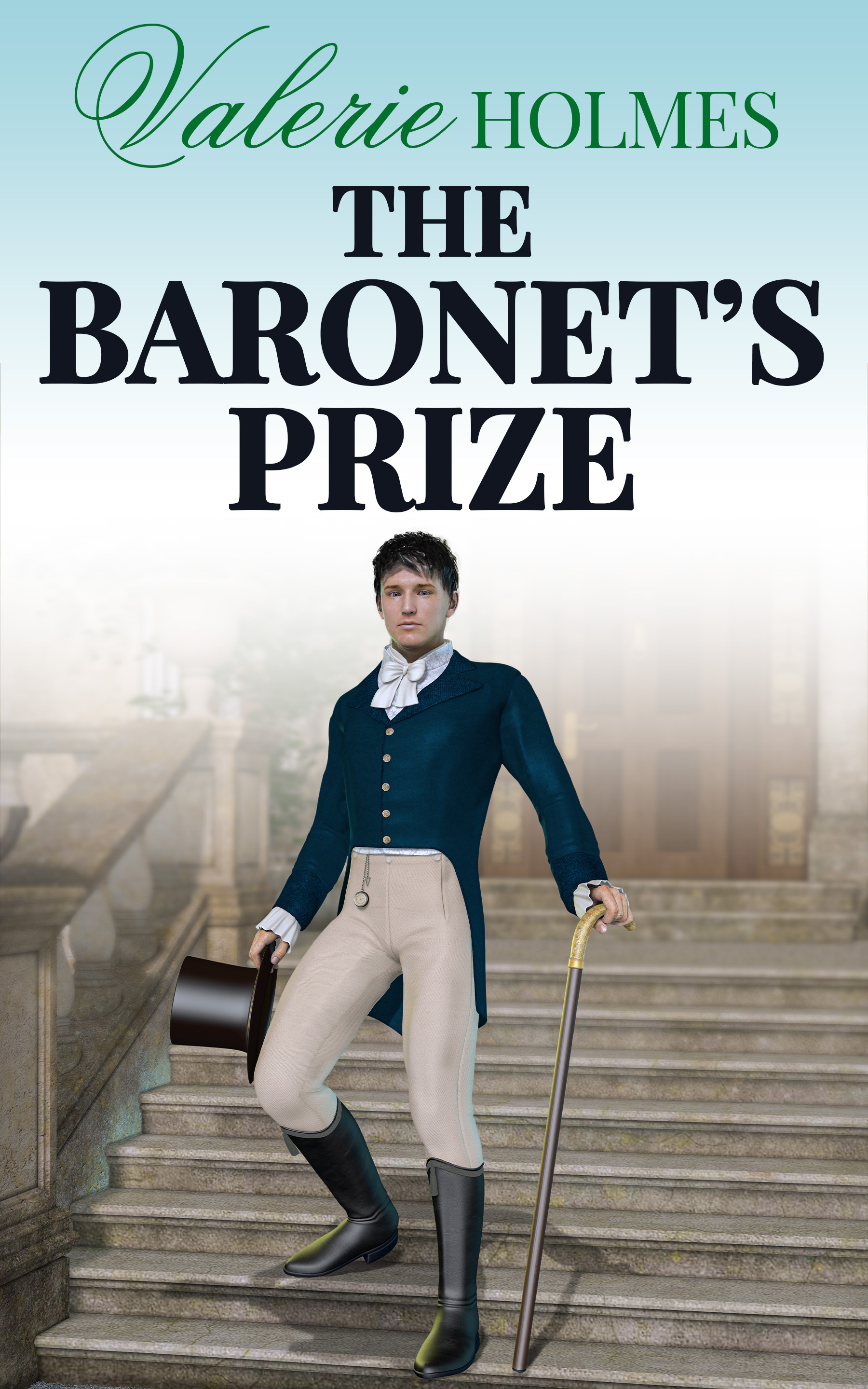
July’s bargain book is The Baronet’s Prize, which is now 77p/$1, which also available on KindleUnlimited.
“A delicious Regency! Eleanor is horrified to be made homeless by her brother’s gambling debts and still more disturbed to find herself falling in love with the man who won the estate. Valerie Holmes resolves this dilemma in a spirited tale that keeps you turning the pages until the final “Ah!” of satisfaction.” GL Robinson, New York USA, Regency romance author.
Reviews left on Amazon (and sites such as Goodreads) are always welcomed and appreciated by authors, especially if the book has been read and enjoyed. They are what keeps the algorithms working in the competitive world of publishing.
I would love to hear from my readers, wherever in the world you are based, and also from visitors to the region.
“It is always incomprehensible to a man that a woman should ever refuse an offer of marriage.”
Jane Austen, Emma
When George III was declared unfit to function as monarch his son, the Prince of Wales, became the Prince Regent. George the younger had little interest in politics, leaving the wars with France to the politicians, whilst he indulged his friends and himself with a lavish lifestyle of elegance and fashion. The Ton – from the French phrase ‘le bon ton’ meaning ‘elegant style’ represent the fashionable society of London – an elite group. The divide between the extremes of the rich of Mayfair, London, and the poor of St Giles, living in the city slums, could not have been more dramatic.
In Parliament seats in the House of Lords were inherited and in the House of Commons could be corruptly bought, so the working and fighting man and the women who relied upon them, who made up most of the population, had little representation to improve their lot. My stories are set in the north of England away from the Ton and Parliament, but life was influenced by their wars, laws, and taxes.
In the above quote Jane Austen expressed a commonly held view, because women of the time had few legal rights as their lives were basically controlled by men.
Upper- and middle-class single females, under the age of twenty-one in England and Wales, were usually dependent upon their father or nearest male relative. If their male relatives were honest, caring, and loving family members then amicable matches secured the future of both parties, in hopefully wedded bliss, once the dowry, pin money, inheritance and jointure, in the event of death of the husband, had been legally agreed.
Book 2
However, fiction requires drama and conflict to spark a good plot, driven by engaging characters. It also reflects the unpalatable truth of the past.
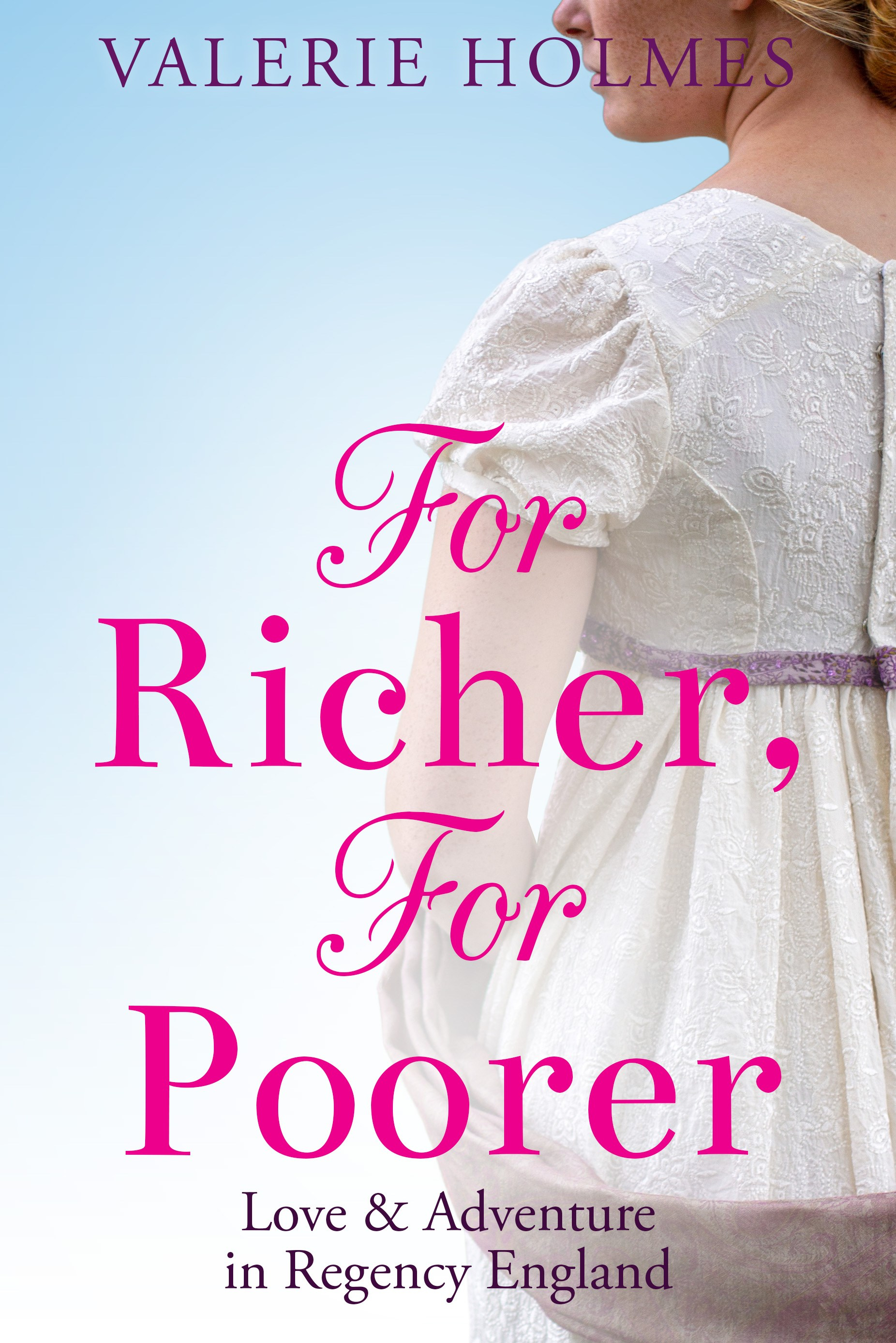
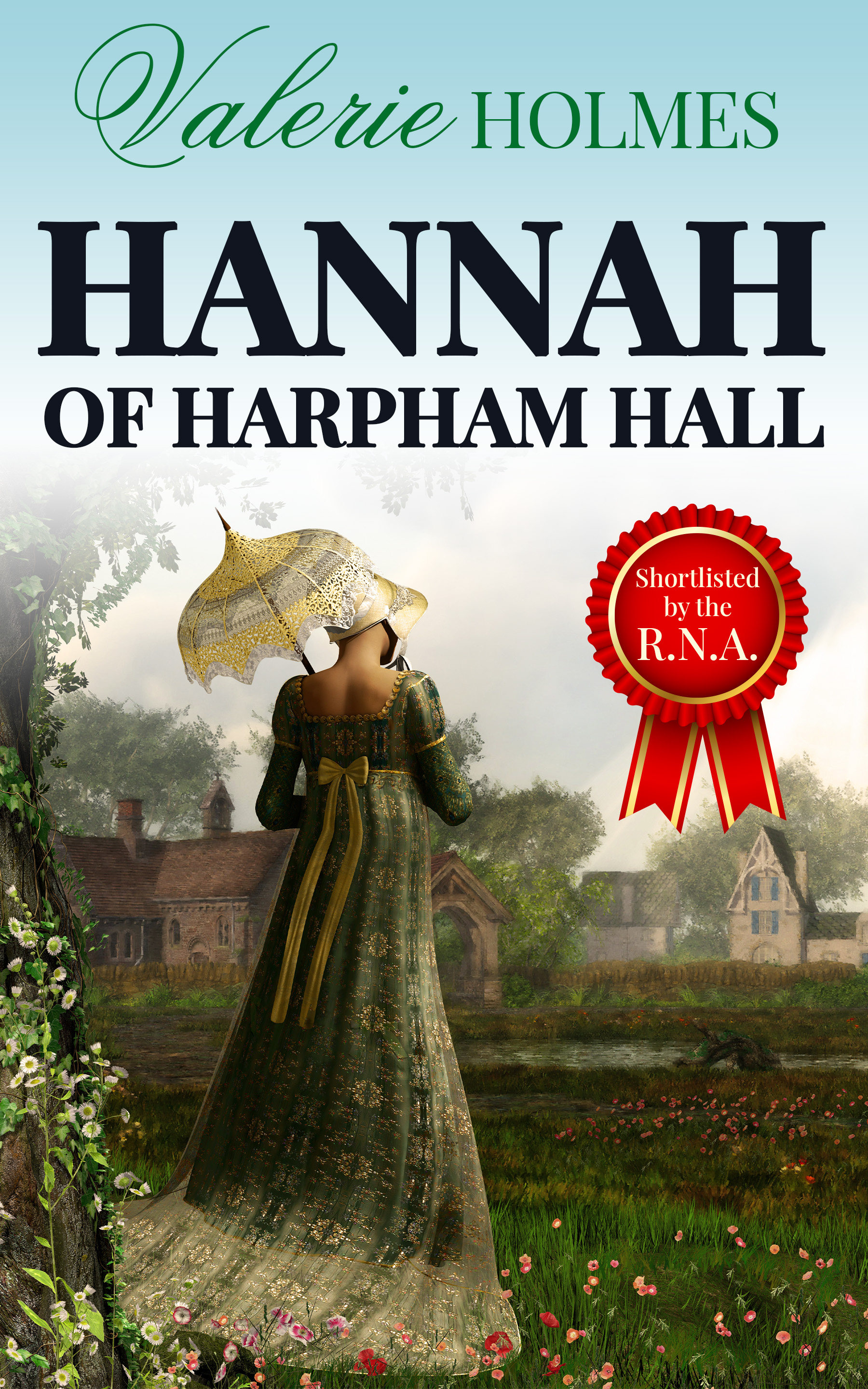
If their male relative were greedy (For Richer, For Poorer), an irresponsible gambler (The Baronet’s Prize) or an overbearing parent (Hannah of Harpham Hall) then the young woman would have few options, left to her own devices unless they had the help of a hero, or a woman of independent means.
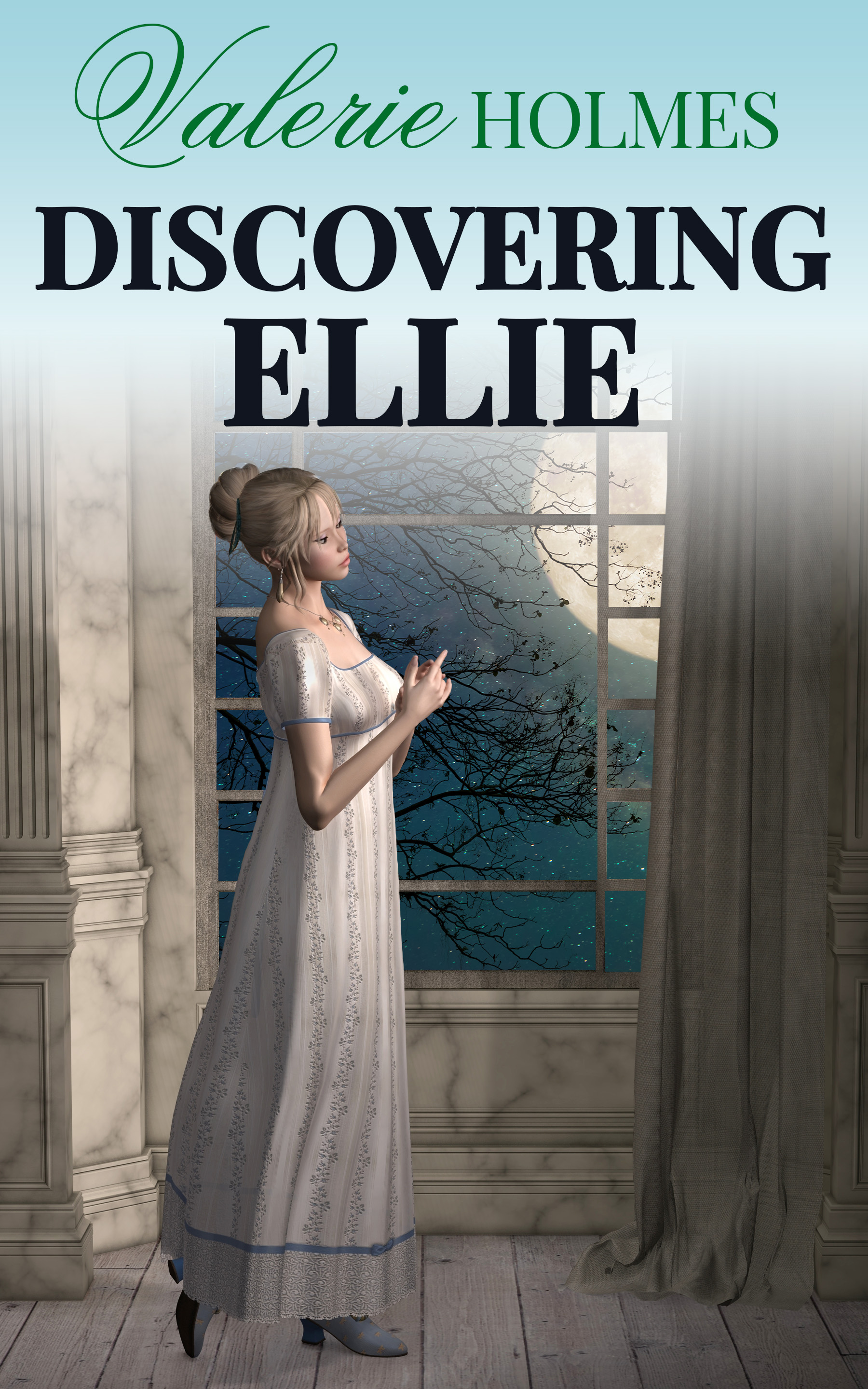
When Ellie (Discovering Ellie) is faced with a marriage match, she tries to diplomatically decline her aunt’s intentions without causing further conflict…
“I am not worldly, Aunt. I cannot think how I could make such a man happy…”
Mrs Hemming laughed. “Well, we agree on one point at least, you cannot think!”
Ellie ignored the insult and continued in her conciliatory tone. “I fear I would only annoy him. Therefore, I wish to politely decline this marriage proposal, discreetly of course, before it is made public. I do not want to cause further embarrassment to anyone. Then he would be able to find a more suitable companion, equal to the task.”
Ellie is completely dependent upon her aunt’s charity until she turns twenty-one. This dependency drives the plot, as Ellie must discover who she is, why she has a recurring nightmare, and how she can avoid a match that is being arranged ‘for her own good’ before it is publicly announced. This latter point is especially important because once it was made public, to break such a legal proclamation would be considered scandalous. Ellie is naïve and knows little of the law, or of the greater world, as many young women of the time.
Book 4
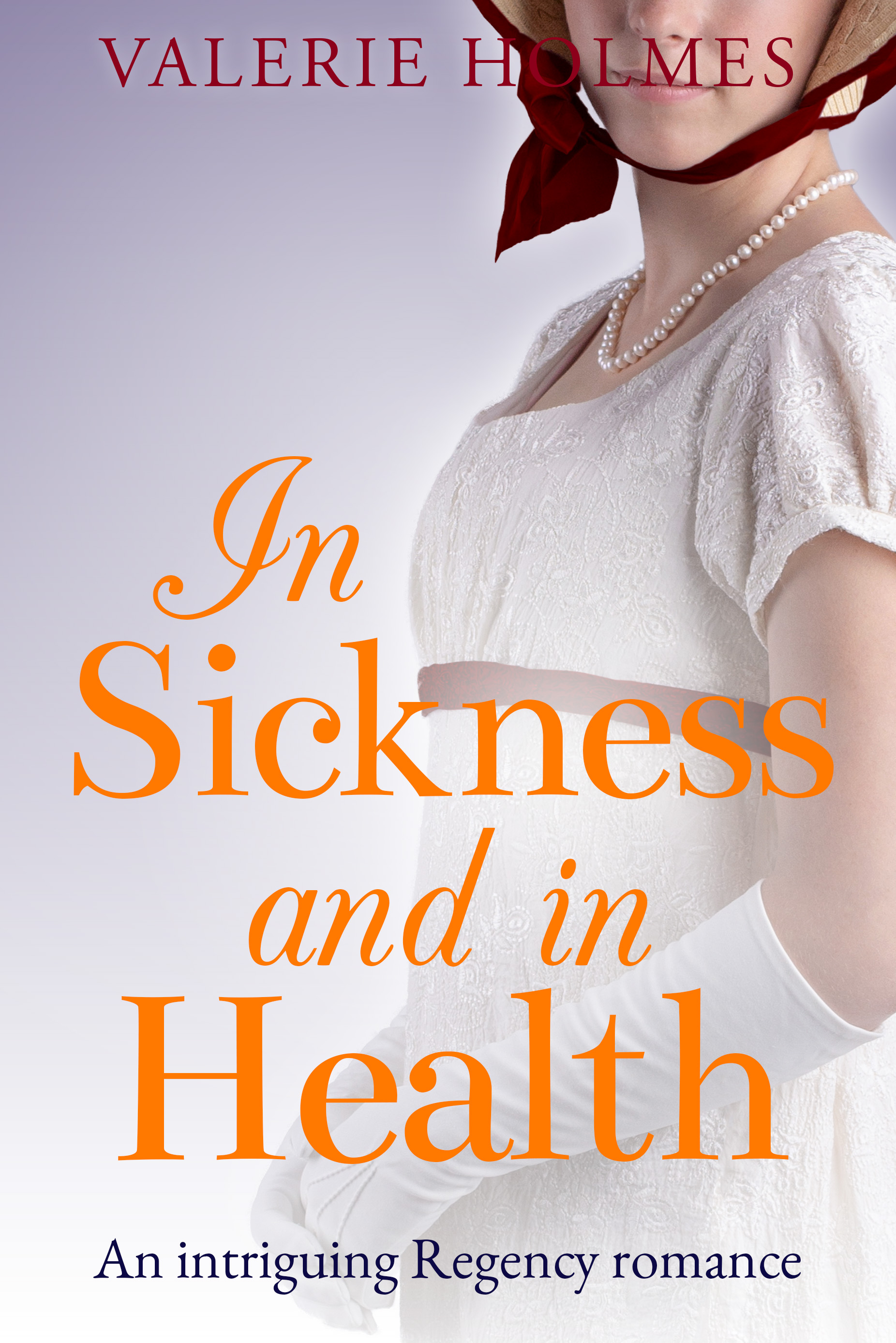
In a situation where an engagement is made between two people if broken, then it could result in a legal action of ‘breach of promise’. At the very least a reputation could be tarnished or destroyed as happened with Lucas Huntley – In Sickness and in Health.
In England, the Marriage Act of 1753 declared both parties had to have their parents’ consent if under 21. However, in Scotland this was not the case, hence the rush for elopements to the nearest place to wed north of the border, such as the famous, Gretna Green, which provided a reason for a mad dash in For Richer, For Poorer.
Friends & Foes Book 1
It is often claimed that fact is often stranger than fiction, but with historical facts the trigger for dramatic fiction is constantly there. Although women were ruled by the law, deemed unable to run their own lives, own their own wealth or children when married, deny their husband sex, or have rights to defend themselves when employed, there would have been plenty who questioned why this was so, such as:
“I do not wish them [women] to have power over men; but over themselves.” Mary Wollstonecraft, A Vindication of the Rights of Woman.
Lydia Fletcher in Betrayal was so influenced. Heroines need to have obstacles to overcome, situations that are a mystery, and the realisation that not all men look upon them in the same light.
Being single by choice was not really an option for a woman, no matter how much she desired to be the arbiter of her own fate. Unless her social status and personal income had been legally entailed and could support her, like the independent Miss Parkes of Penny Manor who befriends Ellie, she would be dependent upon others.
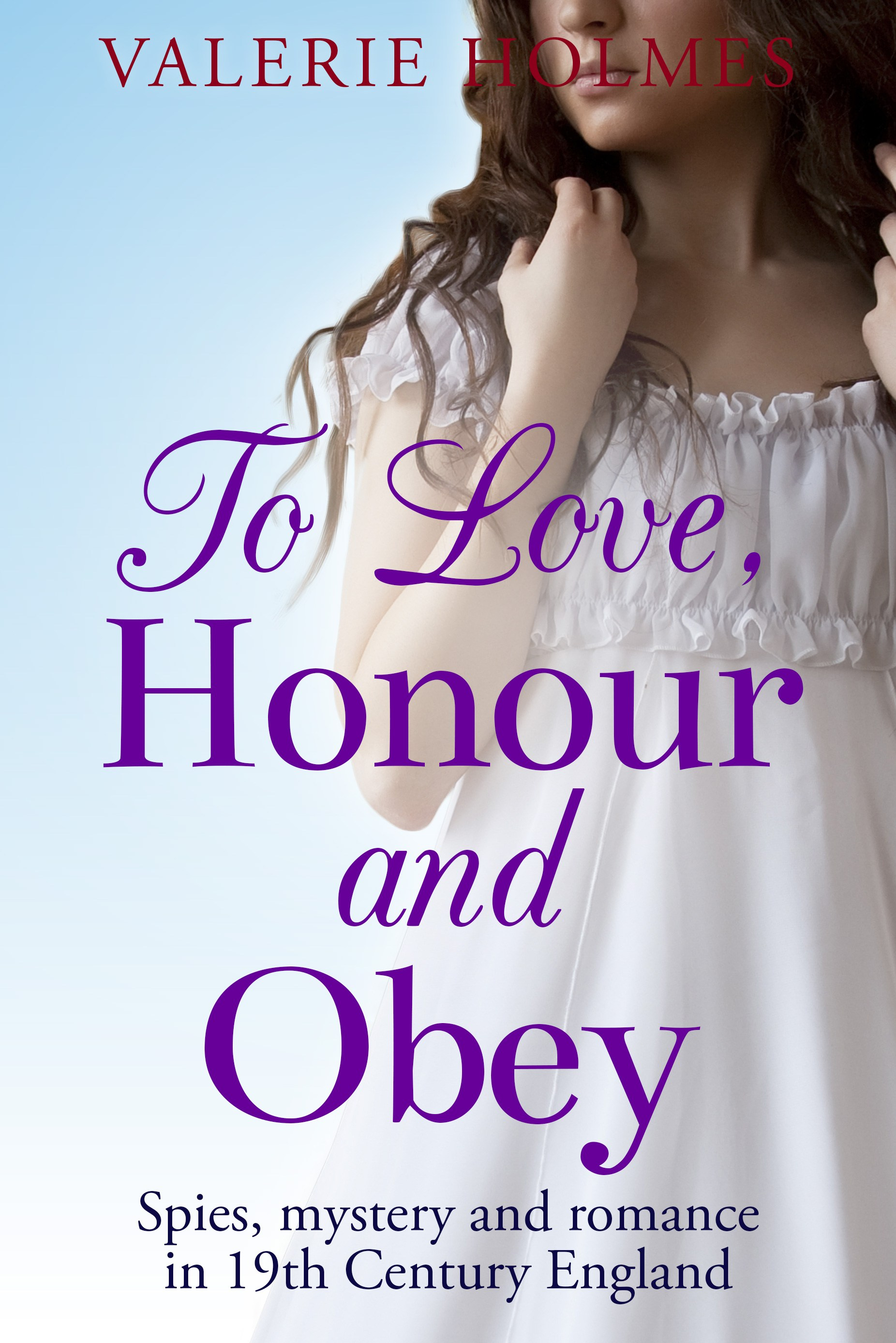
If young women were sufficiently educated, they could try to earn a living as a companion or a governess/teacher, but these were lonely situations with no long-term security. Uneducated or poorer women had less desirable options such as going into service, leaving the cottage to work within the factory or working the land to feed their families. In, To Love, Honour and Obey, Beth is an orphan who has no family or male relative to protect her from the system that was supposed to protect her.
Book 1
Prostitution was an option for the truly desperate. Few climbed the social ladder to a happy and long life even as a rich man’s mistress. Although some beauties and actresses managed to acquire rich patrons, such as the exceptional Harriett Mellon, born a pauper in Cork, Ireland but who ended up married to Thomas Coutts of the banking family, who successfully inherited and managed a fortune..
Servants were supposed to be chaste and could be dismissed without reference or notice if they fell pregnant. They were also open to abuse from their employers, as happens to the kindly Georgina in Betrayal. Again, as I write love stories that are aimed to provide adventure and uplift rather than depress, Georgina’s future is much brighter than many a maid who found themselves pregnant and thrown out on the streets without a reference, through no fault of their own.
Thank you for taking time out to read my blog and visit my website. Please like or leave any comments or questions below or contact me directly via the form on my Manuscript Appraisal page. If any of the above themes appeal just click the title or cover to be directed to the Amazon page.
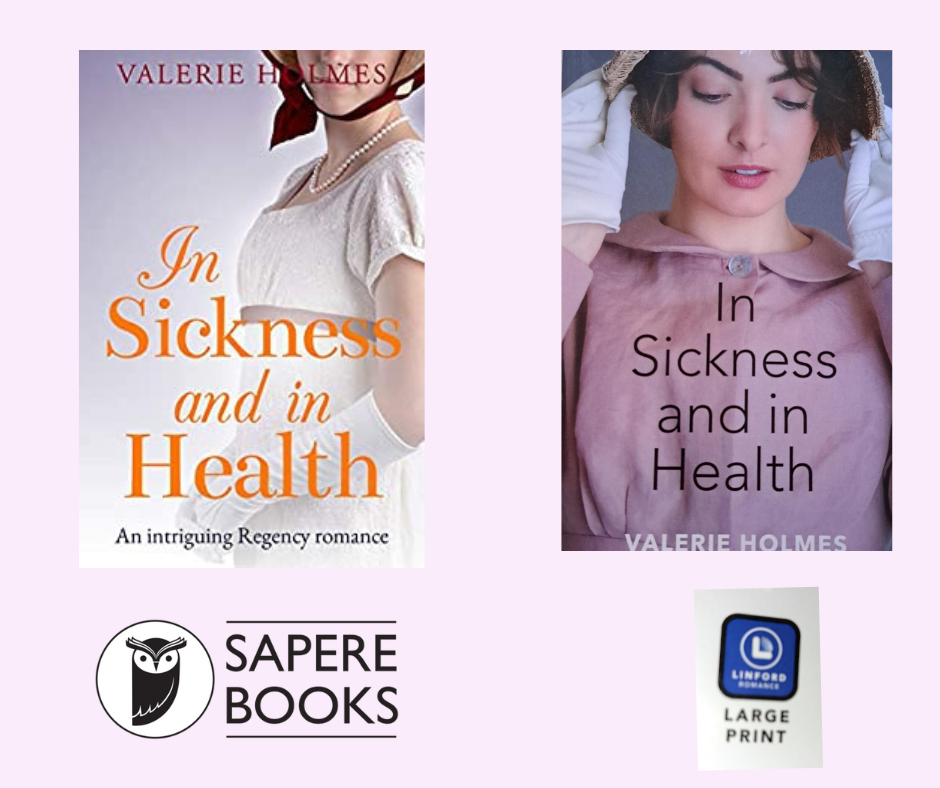
Good news! I do like to share good news… In Sickness and In Health, published in eBook and print by SapereBooks is now available as a traditional large print paperback from @Ulvercroft. Copies can be ordered via Commonwealth libraries. Our libraries have had a hard few years, but there are people who find it difficult to manage an eReader so it is lovely to see this market niche is still catered for.











 valerie holmes, author