An interview with Linda Mitchelmore

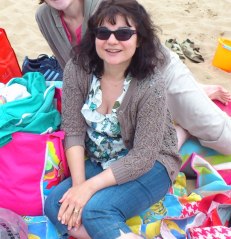
LINDA WRITING ROOMI am delighted to welcome prolific short story writer and successful Choc Lit author, Linda Mitchelmore.

When did you first realise that you wanted to be an author?  
I did things rather back to front. I didn’t consciously start out to be a writer. One Christmas – back in the day – there was a short story writing competition in Woman’s Own. On Christmas Day evening, my family were all glued to the TV – something I don’t get a huge lot of pleasure from as I am deaf. So I thought I’d have a go at the short story competition for something to do. To my utter amazement my short story was short-listed  and published. And I was paid for it. The old cash registers behind my eyes started to ring and I thought, hey, I could make money from all the ‘stuff’ that goes around in my mind…

Your stories have sold internationally. How many have you had published to date? 
I’ve lost count of the exact number of short stories I’ve had published but it is definitely 300+ now. I’ve also had a story broadcast on radio – the irony of that not lost on me.

Writing short stories and longer fiction involve two very different disciplines. What attracted you to short fiction initially, and how much of a challenge was it making the switch to longer fiction? 
Short fiction is just that – short. 750 word stories are quite popular with some magazine editors. I tend to write 1000 word or 2000 word stories as they’re the lengths that tend to fit into most magazine slots. When working on a short story I don’t have to think too much about viewpoints – I only ever write one character’s viewpoint into a short story. I don’t have to have sub-plots, and foreshadowing is something that – depending on the story – doesn’t raise its head much. So they are much quicker to write. When I first started writing I had two teenage children at home, a husband (still got him!) and a part-time job as well as ageing parents and parents-in-law to be doing things for. Short story writing was easier to fit in around all that. Writing longer fiction – 80,000 words or so – seemed a natural progression for me once I had more time to write it. The same premise of ‘person, problem and plot’, with a ‘beginning, middle and an end’, is the same for short stories and novels. The only difference is the time it takes to tell the story.

Your novel, the first of a trilogy, ‘To Turn Full Circle’ is set in your beautiful home county of Devon. Please tell us something about the inspiration behind it? 
The seeds of To Turn Full Circle were sown when I was helping my husband research some family history. We discovered that his great uncle, George, had fished out of Brixham. George had had two trawlers. One of them was lost to the sea in a storm (although with no loss of life) and George had a bad accident on board the other one which meant he had to come off the sea and lost his livelihood. He had to move his wife and daughter back in with his mother. I had a ‘What If’ moment! What if it wasn’t a man who had lost his home because of circumstances, but a young girl? And ‘What If’ the sea still controlled her struggle to survive? And so, To Turn Full Circle was born.
When you begin a new project does your initial idea start with a character, situation, place or theme or does it vary? 
For me a story always starts with an emotion or a feeling – something deep inside my main character. In To Turn Full Circle’s story it was Emma’s determination to survive which drives the story.

You have two more novels to write to complete this trilogy. What do you see as the next challenge for Linda Mitchelmore? 
Writing the next two books is keeping me busy at the moment. I do, however, have a contemporary novel under consideration – the heroine is older than Emma. The feeling driving this story – tentatively called Red is for Rubies – is regret. Most of us have them and in Red is for Rubies, my hero and heroine have lived – apart – with their own regrets for a long time. Will they get a chance to redeem themselves?

Also, I have now signed a contract with Choc Lit for a novella – Hope For Hannah. It will be an e-book initially and out in the close future.

My thanks for a very insightful interview, Linda.

More by Linda:

CHOC LIT LOVE MATCH Layout 1

An interview with Valerie-Anne Baglietto

AuthorCentral

Thank you for being my guest this month.

When/how did you realise that you wanted to be a writer?

I was four when I ‘wrote’ and illustrated my first book, and my granddad stapled it together for me. I think I knew back then it was something I wanted to do. I quickly got bored of the books school tried to foist on me, with barely any plots, and my parents introduced me to Enid Blyton and the Famous Five. When I realised the worlds that books could introduce me to, I was hooked! I instantly wanted to reproduce some of that magic for myself.

You were born in Gibraltar. Do you think this has influenced your work?

I am currently working on a short story for Belinda Jones’s ‘Sunlounger’ anthology, coming out this summer. My contribution is set in Gibraltar, but this is the first time I have used it in a story this way. My great-grandfather and grandfather were writers, though, so I suppose the writing gene is in my blood.

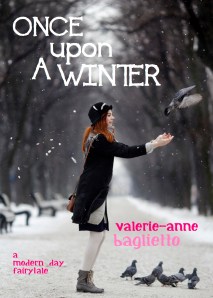
Your stories mix reality, romance and fantasy, such as ‘Once Upon A Winter’. ‘The Moon on a Stick’ is another eye-catching title. Where does your inspiration for the titles come from? Do you begin with the plot, character or title first?

This really varies from book to book. Each one has been different. My first four novels, published by Hodder, were rom-coms, including ‘The Moon on a Stick’. Now that I’ve added a magical, fairytale element to my work, I suppose my titles will need to reflect that. ‘Once Upon A Winter’ had an altogether different title while I was actually writing it, but when I finally tested it out everyone hated it! So I started playing around with ‘Once Upon…’ until I hit the right note. When it comes to ideas for the books themselves, sometimes it stems from a fragment of a plot, or a character. I have no set rules I work by. I usually let ideas ‘slow-cook’ before I start putting them down on paper, but with ‘Once Upon A Winter’ it was more of a quick blast in the microwave before I sat down to write the first chapter.

Could you tell me something about the Novelistas?

I could go on all day about the Novelistas! The group has evolved over time, but it was started by Trisha Ashley over ten years ago. I was one of the early members, along with best-selling saga author Anne Bennett. I hadn’t long moved to North Wales from Essex, so it was wonderful to find a group like this so quickly. We became the ‘Novelistas’ about two years ago. I was inspired by the term ‘fashionista’. And the Spanish for ‘novelist’ is ‘novelista’… you can see where I’m going with this. There are a dozen of us at the moment and we meet once a month near St Asaph, coming from as far as Anglesey in one direction and Manchester in the other. We’re also very varied in what we write, and all at different stages in our careers. We’re good friends as well as writing buddies and we inspire and support one another, and we always seem to have something to celebrate, so lots of champagne corks get popped at our lunches – and launches!

What key advice/tips would you give aspiring writers?

OK, my favourite pieces of advice are: firstly, you can never please everyone, so above all please yourself and write something you feel passionately about. It will show if you don’t. Criticism is hard to hear, but it is inevitable because any sort of creative work is subjective. If you can truly connect with just one person through your writing, though, everyone else who may also come to love it is a bonus.

Secondly, don’t rush it. Write with your heart, finish it, put it away for as long as you can. A month or more, if possible. Come back to it and use your head this time. This is the only way you can really discover your inner editor and see your work through fresh eyes. Sending it out too prematurely can be the difference between rejection and acceptance, so why risk it? Similarly, publishing it yourself before it’s ready can be the difference between the best-seller charts and obscurity. Don’t hit that ‘publish now’ button too soon!

What is next for Valerie-Anne?

As well as the short story for the ‘Sunlounger’ anthology, I am working on a novella which will be out spring/summer this year. Just like ‘Once Upon A Winter’ it has a contemporary fairytale theme and is set in North Wales. I’m constantly inspired by my surroundings, and feel very lucky to live in such a beautiful part of the world. There is also another full-length novel simmering away, but this won’t be out until 2014.

Thank you for taking the time to write such interesting and inspiring answers.

More by Valerie-Anne Baglietto:

Once Upon A Winter is currently at a Valentine’s special promotional price!

Once Upon A Winter

An interview with Margaret James

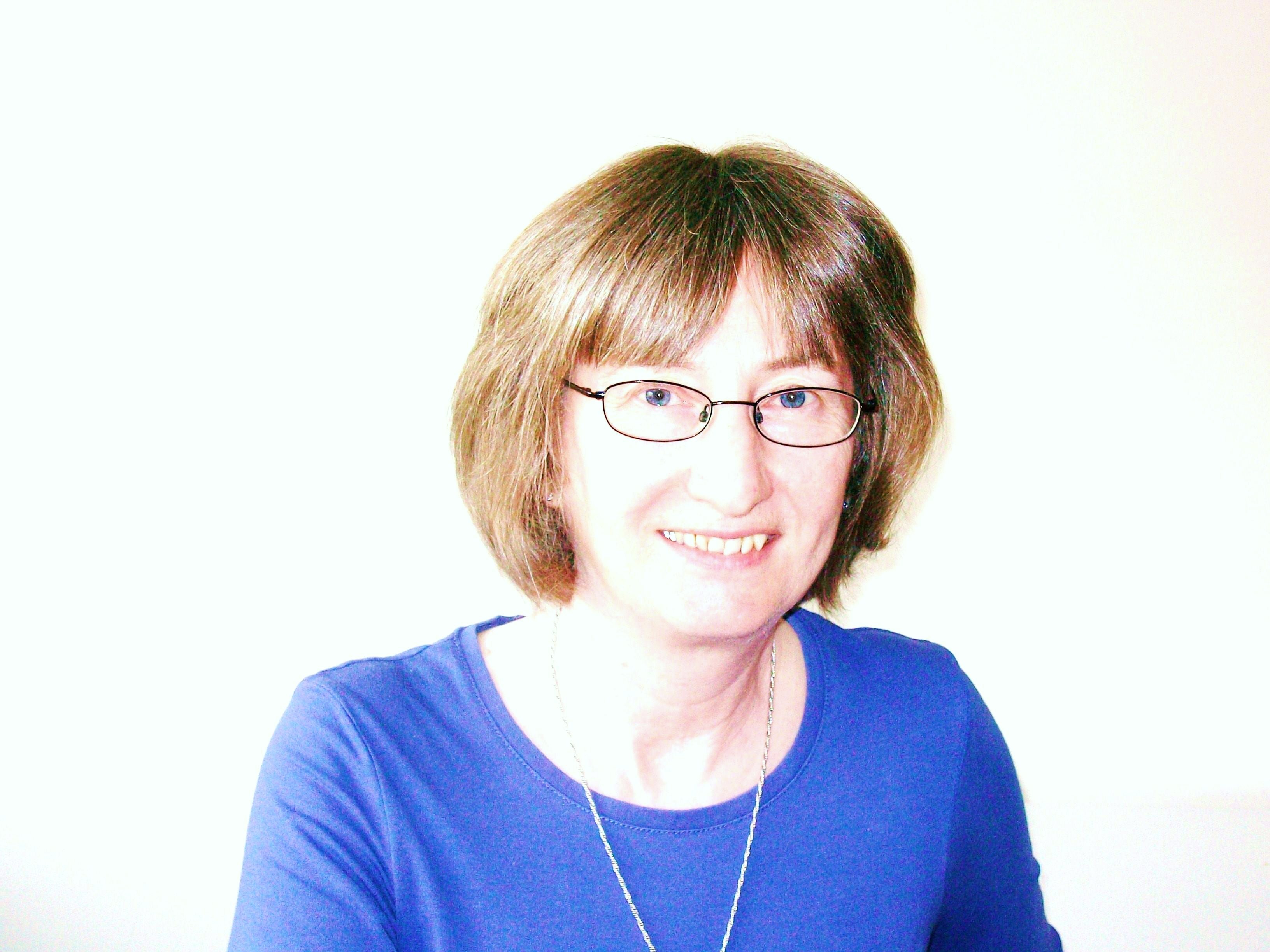
Marge2Welcome!

You have written many historical and contemporary romantic novels as well as being a prolific journalist and inspiring writing tutor. Could you take us back to the beginning of your career and tell us when your desire to be a novelist began?

Thank you for inviting me to be the first guest author on your blog, Valerie. I’m delighted to be here. Ooh, back to the beginning of my career – that’s a long time ago, almost thirty years. I had two very small children. My husband worked away from home a lot so I wanted to find something to do at home which would earn some money, too.

I decided I would write some short stories for women’s magazines, because that had to be easy, right? No, of course it wasn’t easy. As I soon came to realise, writing any sort of fiction isn’t easy. But, after trying for several months and failing to sell anything, I finally had my first acceptance and this encouraged me to keep going.

Okay, I thought, could I write novel, too? At that time, family sagas were hugely popular so I thought I would try writing one myself. Again, it wasn’t easy, but I was determined to finish my novel and also sell it to a publisher. Rejection after rejection came along, but I carried on sending my novel to agents and publishers because – as many of my friends and family members know – I’m not the sort of person who gives up!  Finally an agent took me on and sold my novel A Touch of Earth to Futura.

I think I was determined to become a novelist because although I could see it would be a challenging career it would also be possible – with a bit of luck – to get somewhere.

What originally drew you to writing romance?

I’ve always been fascinated by how human relationships work – what makes us like one person and dislike someone else, what happens when we fall in love and out of love again, how families work and why family relationships break down. So I think I was always going to be a romantic and relationship novelist.

Your latest novel is a romantic comedy. What inspired the change in direction?

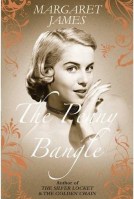
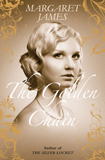
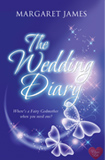
My next novel The Wedding Diary is set in the present day and is mostly about people I haven’t written about before, but it also mentions characters and settings from my most recent historical trilogy – The Silver Locket, The Golden Chain and The Penny Bangle.

What key advice/tips would you give aspiring writers?

If you’ve decided you’re going to be a writer, stick at it and believe you have something interesting to say. There will be times when the going gets hard and you’ll need to be able to convince yourself that it’s worth going on.

Make friends with other writers face to face and online, via Twitter, Facebook and their blogs – most writers these days have blogs and will be delighted if you follow them. Think about joining a local or national writing group in which you can meet people who understand the joys and frustrations of being a writer. Then you’ll never feel isolated and alone.

Read other people’s novels because then you will absorb good practice and realise there are many different ways in which you can tell a story.

What’s next for Margaret James?

I would like to write another novel set in the present day. I also have a Victorian murder mystery simmering on my back burner, but there is a lot of research to do for that one and I don’t know if it will ever come to the boil!

Thank you for taking the time to answer my questions. I shall look forward to reading The Wedding Diary.

More by Margaret:

51ma7zqD+nL._SS500_TheSilverLocket:Layout 1PrintTWD_thumbnail copy