Catching up with Linda Stratmann

Welcome back, Linda.
Congratulations on becoming the new Chair of the Crime Writers’ Association!
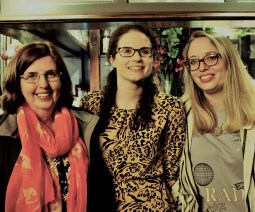
Photographs by Gary Stratmann
Linda, what is your vision for the CWA as the new Chair?
One of the greatest pleasures of being a member of the CWA has been the people I have met and the friends I have made. I joined in 2004 and have served as Membership Secretary, Dagger Liaison Officer and Vice Chair. Seeing the membership numbers grow, with new Chapters formed both at home and abroad has been a rewarding and exciting experience.
The benefits to our members as listed on our website, are substantial. We are doing so much more to interact with other organisations, supporting libraries, booksellers and publishers and have established National Crime Reading Month, and formed the Crime Readers Association, which is free to join, and provides a regular newsletter to over 10,000 subscribers and bi-monthly Case Files.
The CWA has never been in a more vibrant and healthy state than it is now. For that I must express my gratitude to all the former Chairs, whose contribution has made the Association what it is today. I must especially thank Martin Edwards, who in the last two years has striven to make us more businesslike and efficient. Martin has established a CWA archive at Gladstone’s Library, a beautiful location which holds regular events, notably the crime writing related Alibis in the Archive which has proved extremely popular.
I can assure everyone that I do not intend to be the new broom that sweeps away the past. Neither do I want to rush into new ventures before we are ready. The foundation we have now is a firm one, and I want to consolidate what we have before considering how we can move on in the ever-changing world of publishing. I do want to further develop the already formed links with the Romantic Novelists’ Association and the Society of Authors as well as other crime, thriller and mystery writers associations worldwide.
Above all, I see the CWA as an organisation which should serve all its members at whatever stage they are in their writing career; whether debut, mid-career or long-established. We all have something both to contribute and to gain. The CWA is the flagship organisation for crime writers, and a brand of quality. The Dagger prizes we award annually are a recognition of the best in crime writing. My hope is that the future will further strengthen that position.
I wish you and the CWA ongoing and even greater success!

This slideshow requires JavaScript.


Twitter – @LindaStratmann
Linda Stratmann is the author of thirteen non-fiction books mainly about true crime, but her work also includes Chloroform, the Quest for Oblivion, a history of the use and misuse of chloroform, and three biographies, notably The Marquess of Queensberry: Wilde’s Nemesis. The Secret Poisoner chronicles the efforts of science and the law to tackle poison murder in the nineteenth century. She has recently edited a new volume in the Notable British Trials Series, The Trial of the Mannings.
Linda also writes two fiction series. The Frances Doughty Mysteries set in1880s Bayswater, feature a clever and determined lady detective, whose adventures explore aspects of Victorian life such as diet, education, medicine, women’s rights, fear of premature burial and the fashion for cycling.
The second series is set in 1870s Brighton. Mina Scarletti is a deceptively diminutive lady with a twisted spine, whose boldness and confidence enable her to overcome her apparent disadvantages. Mina writes horror and ghost stories and exposes the activities of fraudulent spirit mediums who prey on the vulnerable bereaved.


Aunty Mary’s Rhubarb Crumble


The humble rhubarb has gone from being known as an ancient cure, to a favourite British dessert, to one that post WWII fell from grace. During the war years the price was controlled so that everyone could afford it and many, like my Aunty Mary learned how to use it in a variety of recipes from tarts to Rhubarb and Ginger Jam.

This article looks at the ever popular Rhubarb Crumble.

So what is it and how did it come to be linked so strongly with Yorkshire?

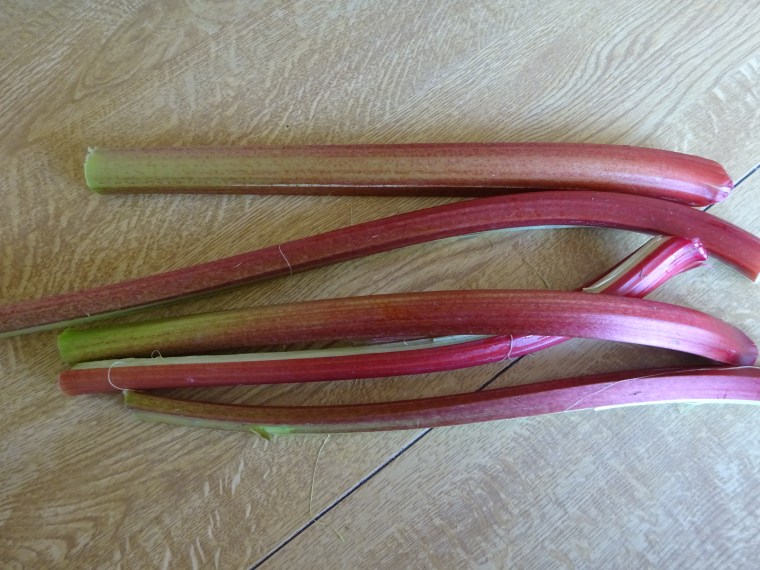
It is a large leafed herbaceous perennial growing from rhizomes – a vegetable, the stalk of which provides vitamins K and C but lacks sweetness and so is low in calories. However, the leaves are high in oxalic acid which can damage the kidneys.

DSC01631

Because it is not sweet sugar is used in recipes and this will affect some of the benefits eating the stalk can bring, when cooked properly. It is thought to have been used as far back as 2700 BC as a medicine. Claims that it could treat gut, lung and liver problems kept it popular. In recent years it has come back into fashion and there is still a Wakefield Rhubarb Festival held in February.

Rhubarb was a native crop in Siberia growing on the banks of the Volga.  Marco Polo is attributed with bringing it to Europe. In the seventeenth century it is claimed to have been more valuable than opium.

The Yorkshire Rhubarb Triangle began around 1877 when the method of forcing rhubarb was brought to West Yorkshire. Forcing had been discovered by accident in the Chelsea Physic Garden, London, in 1817, but the conditions of the sheltered area  between Leeds, Wakefield and Bradford in the shadows of the Pennines provided a perfect growing environment. The rain, cold and the high nitrogen available from ‘Shoddy’ – a by product of the successful woollen mill industry that also thrived in the area – all helped. The Yorkshire coalfields provided an ample supply of fuel to heat the sheds needed to grow the crop in the dark. Then excellent railways in the region linked to London and Covent Garden market as well.

Forced rhubarb was grown in sheds and the first crop early in the year was said to be the best.

The following recipe is for a simple dessert and not a health recommendation for this unique rhubarb crop.

When picking rhubarb go for early and straight, thin colourful stalks. If the stalks are limp they are not fresh. Later in the year you might need to strip off the tougher outer layer before cooking.

Ingredients

6 Stalks of rhubarb
Two teaspoonfuls of ground ginger
1 level tablespoon of Demerara sugar

For the Crumble

7 oz  unsalted butter
7 oz golden caster sugar
14 oz plain flour

Method

Rub butter and the flour together until crumble is fine. You can substitute some flour with oats to make the top crunchier.

Add in the sugar (to taste).

When finely mixed it should clump together when squeezed once and fall apart again a separate time.

Leave in the fridge to chill.

Top and tail the crunchy stalks of rhubarb.

Either soften in a pan with a knob of butter and the ginger and sugar until softer, or bake on a tray in the oven on 170C for ten minutes.

If the pan method is used, drain off some of the fluid. If the oven method is used then transfer to the serving dish once the rhubarb has been tested to make sure it is tender.

I would love to receive any other original recipes for the versatile and unique rhubarb.

Meet prolific crime writer Margaret Duffy

I am delighted to welcome crime writer, Margaret Duffy, as my guest this month.

unnamed (2)

Margaret, your website mentions your Czech granddad. Was he the person who inspired your passion for creating and writing stories began?

Although my lovely Czech Grandad told me spooky stories about castles with corridors where candles suddenly blew out he died after having had several strokes when I was quite young so any connection with him must be in my genes. The Czechs apparently are known to be story-tellers. My Dad had a novel called Many Bridges published in the fifties that was based on truth, the Czech Resistance during the Second World War. My flights of fancy started with writing a play with me acting all the parts, six of them, performed in the living room in front of my parents. I really hope they weren’t too bored.

Your work has been delightfully described as ‘police procedural with a touch of romance’, do you have to keep the balance carefully, as crime is your first love – so to speak?

My characters are married which I suppose is also a bit boring. Twice actually as Ingrid (Langley) found Patrick (Gillard) so insufferable at one stage that she threw him out (of her cottage) and went on to smash his classical guitar. She can be like that sometimes. Later, when he was recovering after being horribly injured serving in Special Services and turned up on her doorstep saying he had to find a working partner for a new job in MI5 she took pity on him. But don’t worry he said, no relationship, no sex, just a socialising job, perhaps at house parties given by the rich and famous. In a word, spy-hunting. They soon threw the sex reservation bit out of the window when the old magic of their original relationship resurfaced.
DCI James Carrick of Bath CID eventually marries his one-time DS Joanna Mackenzie too and the four end up working on cases together when Patrick and Ingrid are recruited by the National Crime Agency.

To date you have had over 20 Patrick Gillards, 4 James Carrick and 3 stand alone novels published. Was it the character, setting, or crime that inspired these?

It’s these characters that inspire me all the time, I’m much more interested in how they get the better of serious criminals than the crimes themselves. And criminals are usually rather stupid.

Do you plan each novel out meticulously before writing a first draft?

No, I never know how the plot will develop or end when I start, I just write until it sort of grabs me. I don’t do drafts either, just make corrections and polish it as I go. I find it helps me to picture exactly what’s going on.

What is the most fascinating piece of research you have stumbled across when researching a novel?

The most interesting piece of research I ever did was to read a paper on the various changes that take place with regard to dead bodies when they’re immersed in water.

When did you fall in love with the beautiful city of Bath?

We lived near Bath for several years and I had a job in the City centre. I was struck how, just behind the tourist-thronged streets, beautiful buildings steeped in history and obvious wealth were slum areas, drunks and the homeless. A good place to set crime stories. It’s changed a lot for the better now though.

This slideshow requires JavaScript.

You are a member of the Crime Writers’ Association – what does the organisation mean to you?

The CWA is marvellous from the point of view that it’s so rewarding and valuable to mix and talk to people of like mind.

What key advice would you share with aspiring writers?

Aspiring writers should never take no for an answer, just work hard to improve what you’re trying to achieve.

What has been the highlight of your writing career to date?

The highlight of my writing career was getting my first crime novel, A Murder of Crows, published.

What is next for Margaret?

What next? I’m working on number twenty eight, Gillard’s Sting, and also trying to interest an agent, as mine doesn’t handle it, in a sci-fi crime novel, The Killing Mind.

Many thanks for your time in answering my questions and sharing some insight into your writing world. I wish you every success with your new project and hope you let us know when it is published.

http://www.margaretduffy.co.uk/

Money Matters in Regency England


Book 2 http://getbook.at/ForRicher
Join Parthena and Jerome on their exciting adventure!

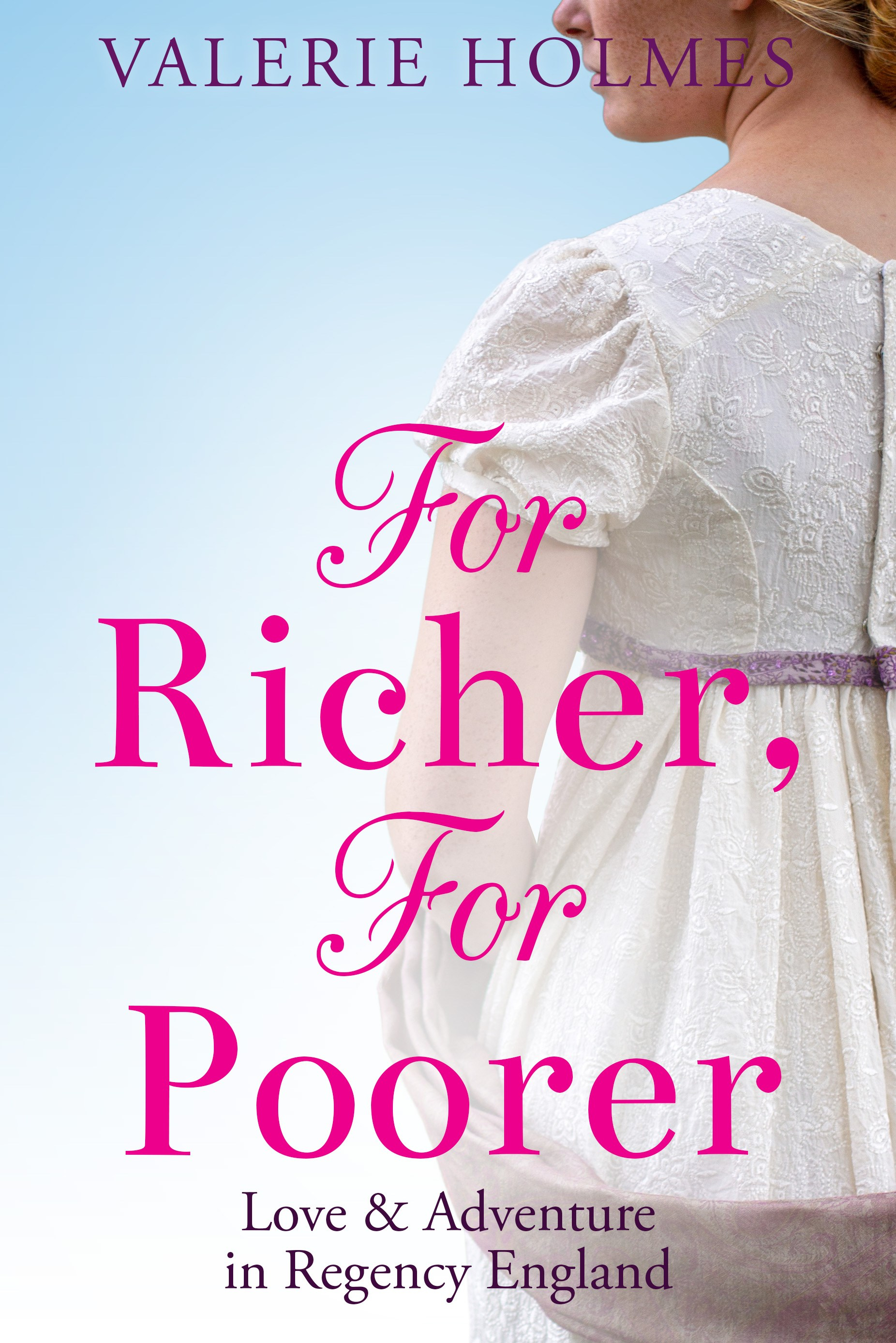
The first conflict in For Richer, For Poorer occurs when heroine Miss Parthena Munro ‘borrows’ a coin purse from Mr Jerome Fender.

I used the term ‘coin purse’ rather than wallet because, unlike the pre-plastic card society where paper money had been the norm it was not so commonly used in Regency England.

Banknotes outside of London were not guaranteed by the Bank of England until 1826 when its first branch outside the City was opened in Gloucester. Privately owned regional banks in England and Ireland had unique notes that were signed by their own chief cashiers and therefore their continued validity depended on the success of the issuing bank. This meant that banknotes were not as secure as they are today, should a run on such an establishment occur, it could wipe out a person’s assets.

Coins had immediate and standardised values and so, although weighty, were accepted everywhere.

The golden guinea had a value of 1 sovereign and 1 shilling making it the highest denomination.

Next was the sovereign (1 pound) worth 20 shillings.

Then a half sovereign worth 10 shillings

A Crown equalled 5 shillings

1 shilling equalled 12d (old pennies)

1/2 shilling was known as a six pence piece.

A groat was 4d

A farthing was 1/4d

However, not everyone in Regency England was expected to pay their bills immediately. The aristocracy, upper and middle classes lived on credit to a large extent. This seems a strange inequality to us today, but it was the lower classes who were expected to pay coin for their goods and services on demand.

This created a highly unfair society. It also led to a number of Debtors’ prisons such as  York prison, Marshalsea and The Fleet. Charles Dickens’ father was in the former under the Insolvent Debtor’s Act of 1813, when he failed to pay his debts to a trader. It was a hard system to break free from even though there was the chance of day-release to go and work, but debts continued to mount.

This period marks the beginning of change in what had previously been the norm because of the inability of debtors to pay their cumulative debts to their creditors, which could then bring these companies down as they also had creditors too. Therefore, the system had to change and settlement by cash was being favoured, yet the debtors still kept these prisons throughout Dickensian times.

What Parthena did could have cost her liberty, her life or seen her transported to the . It was just as well that it was Jerome she borrowed the coin from!

Book 2

Mount Grace Priory
Now a ruin, but once a thriving community, beautifully set against the forestry with the moorland above.

Aunty Mary’s Yorkshire Parkin

DSC01649 (2)

Nothing felt more homely and welcoming when I was growing up in my home town of Redcar, North Yorkshire, than entering my Aunty Mary’s old terrace house and smelling the delights being created in her kitchen.

Artie, her friendly black spaniel, also shared my enthusiasm for her cheerful personality and her home cooking hospitality.

One such recipe, Parkin, is a traditional cake (not for the health conscious or diabetic) that is basically a ginger cake packed with oats and treacle. It is mentioned in my books, such as: For Richer, For Poorer, as its recipe has been passed down the generations.

It was certainly made during the Industrial Revolution and gained favour as the ideal snack to partake of in November on a cold Bonfire Night on the 5th. The first Sunday of that month is referred to as ‘Parkin Sunday’.

This rich cake, full of flavour, also helped to keep hardworking folk filled and warmed through the cold winter months.

Lancashire also has its own recipes for parkin, but there are differences between the two versions. Yorkshire includes oats and uses more black treacle (molasses) giving a darker distinct flavour. Lancashire Parkin tends to be lighter and sweeter using more golden syrup (not corn syrup, which is different) instead. Opinions on this vary, as much as the recipes because some people leave out the oats all together, but this version hits the mark when you want to feel re-energized on a cold and dreary day.

The recipe I have included here is the one my Aunty Mary used and the one that when I do indulge takes me back to my childhood, a warm and loving home with my aunt and of course dear old Artie.

Ingredients

5 oz      oats
4 oz      SR flour
1/2 tsp baking powder
2 tsp     ground ginger
1 tsp     mixed spice
1/2 tsp  nutmeg
Pinch of salt
5 oz       black treacle
3 oz       golden syrup
4 oz       soft brown sugar
4 oz       butter
2 large   beaten eggs
1 tbsp    milk


Method

  1. Line a 1lb loaf tin with baking paper or a paper loaf case.
  2. Preheat oven to 150C
  3. Assemble dry ingredients in a large bowl
  4. Melt the brown sugar with the treacle, syrup and butter – DO NOT BOIL THEM – remove from heat once the sugar has melted. Allow to cool slightly.
  5. Pour the hot mixture into the dry ingredients and mix.
  6. Add eggs and milk – stir well. You should have a thick liquid batter mix.
  7. Pour into the prepared tin and bake for between 1 to 1 hour and 20 minutes. Or until a skewer comes out clean when tested. The cake should be firm and springy.
  8. Allow to cool in the baking tin.

The resulting cake should be dark, sticky, and spicy and has a flavour that improves if it is left in an airtight tin for 3-5 days after it has been allowed to cool.

Then enjoy a slice with a nice cup of tea – but in moderation!

If you know any other versions of this old favourite or more about the origins of it I would love to see your comments.

https://www.amazon.co.uk/Richer-Poorer-Adventure-Regency-Yorkshire-ebook/dp/B07LCSMG9R/
Availbale now

Jacobean Architecture and Kiplin Hall, Richmond, North Yorkshire.

This slideshow requires JavaScript.

Leaham Hall in For Richer, For Poorer is a Jacobean style of country house that provides employment for its estate workers and the small nearby village of Leaham. In reality the image of Kiplin Hall inspired its fictitious counterpart.

Jacobean architecture gained popularity during the reign of King James I (1566-1625) with its love of symmetry and the mixture of gable or flat roofs; these brick built buildings were houses of the well-to-do landed gentry.

The era’s love of colour, Palladian columns, woodwork and carvings, along with the use of granite made them quite unique. The central staircase would be a focal point that lead the family or visitors up to the first and second  floors.

The Jacobean period was one that was tumultuous and the use of heraldry could reveal the owner’s loyalty. These houses, like many of the time, could also have been used as safe havens for those who had Jacobite sympathies.

Kiplin is a treasure to be discovered, tucked away in the beautiful countryside of North Yorkshire near the village of Scorton. It was built by George Calvert who was the Secretary of State to James 1 and founder of Maryland USA.

I borrowed some aspects of this tranquil setting for my plot in For Richer, For Poorer and placed Leaham Hall under threat.  The early nineteenth century was a time of great social, industrial, political and religious change; so I set Parthena and Jerome Fender loose on a quest to save the Hall, the estate and the village.

Here are some pictures of the moorland trods that Parthena and Jerome have to cross. You can find out more about these ancient pathways in my blog post at Sapere Books

This slideshow requires JavaScript.

A step back in time!

533900_193142140832995_1059893854_n

In my book Abigail Moor The Cruck Inn was named after the design of the North Yorkshire cruck-built buildings. There are many examples in the region but none as well preserved as the old inn Spout House which served Bilsdale until it closed its doors in 1914.

I visited it when researching the area for my book and found it was literally like taking a step back in time. Spout House can be visited from Easter – 31st October. It is just one of  many historic places hidden away in the beautiful North York Moors National Park.

The amazing time capsule that is Spout House was the inspiration behind the starting point of Abigail’s adventure that takes her on to the beautiful city of York with its gothic cathedral, then to the amazing historical whaling port of Whitby and further to discover the rugged bays of the North Yorkshire coast.

This slideshow requires JavaScript.


Historic York.

This slideshow requires JavaScript.

The ancient whaling port of Whitby.

This slideshow requires JavaScript.

You can follow Abigail on her journey here!

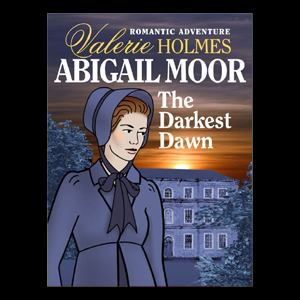
Abigail Moor: The Darkest Dawn is available at Amazon and Smashwords

AbigailMoorTwitter_1

An interview with Linda Stratmann: Vice-Chair of the Crime Writers’ Association.


LS_promo (6 of 6) copy300dpi

Welcome Linda,

Your writing career did not begin with fiction, but with non-fiction study of historical crimes. Where did this interest in researching and writing about real crime begin?

It began with my mother! She was an avid reader and a lover of history, and she was fascinated by famous trials. We used to watch true crime programmes on television – we especially liked Edgar Lustgarten – and also discussed cases reported in the newspapers.

In all the cases that you have researched did one motive stand out above all others: greed, hate, love, necessity, premeditated or spontaneous revenge?

The foundation of so many murders is financial, but it is not necessarily always greed, sometimes it is desperation. People kill for insurance money, often to extricate themselves from debt. They kill to escape a relationship because of the costs and consequences of divorce. In the nineteenth century, which is the era I write about most often, poor families poisoned their children just to get the money from burial clubs.

It is not surprising that with such a vast amount of accrued knowledge on true crime that you turned to writing fiction. What was it that enticed you to set both your Frances Doughty and Mina Scarletti series within the Victorian period?

Many years ago I wrote about a Victorian case, the trial of Adelaide Bartlett in 1886 for the murder of her husband. The case was so complex that I realised I needed to understand the Victorians in order to discover the truth behind the lies and the euphemisms; I needed to know how they thought, and how they expressed themselves, and what they believed. The more I researched the more fascinated I became with every aspect of that period. It was natural to want to recreate that time in my fiction.

Both of these women have to overcome difficulties and work to make a life for themselves that is at odds with the expectations of their gender within the period. Were they influenced or based on real characters that you had researched?

Frances is not based on anyone, however Mina Scarletti, who suffers from scoliosis was inspired by two people. Eva, who had a very severe distortion of the spine, was the aunt of a friend of mine. I never got to know her well and she died when I was a child.
Annie Jane Fanny Maclean had a curvature of her spine and walked with a limp. In 1879 a scoundrel called Lewis James Paine romanced her and induced her to transfer her property to him. He then plied her with alcohol and withheld food until she died. A court found him guilty of manslaughter and he was imprisoned for life. Annie’s fate highlighted for me the vulnerability of a disabled young woman in the Victorian marriage market. I wanted a heroine who could overcome this and be strong and independent.

How far did you delve into the world of psychics to help Mina Scarletti unmask the Victorian fraudsters?

I have about a hundred books on the subject – so far! These are both contemporary accounts and modern studies. I have read numerous online journal articles and newspapers, both nineteenth century and more recent. I have also read books by Victorian conjurors and illusionists, and attended a Victorian séance workshop. When I describe a séance in my books I always have to know before I write it how the effects were produced.

This slideshow requires JavaScript.


In the light of all your research would you agree that the truth is often stranger than fiction?

That is often the case, which is why I like to append historical notes at the end of my fiction books. I have just written one for the fourth Mina book because a reference I included was so odd that I felt I needed to reassure the reader I was not making it up.

Are you a detailed plotter when you start a new project?

I always know when I start who the villain is and how and why the crime was committed. I also write what I call the ‘back story’, the details of what has happened up to the point when my book begins. So I know the start and the finish, but what happens between those points has to be natural and organic, as my heroine needs to learn the facts and solve the mystery in a convincing way. That develops as I write.

In all the cases you have studied:-
Which real criminal did you most despise and why?

There are so many! When I wrote The Secret Poisoner I was especially appalled by Richard Overfield who cruelly and cold-bloodedly murdered his baby so he wouldn’t have to support it, by giving it sulphuric acid. He was hanged in 1824.

Was there a real criminal that you admired the cunning of even if not their actual acts?

In cases of fraud there are many clever people who misuse their considerable talents for criminal purposes. Harry Benson and Willam Kurr who I wrote about in Fraudsters and Charlatans were extremely able career criminals who overreached themselves through greed.

Was there anyone you empathised with, or at least understood their motive to commit murder?

Of course I don’t approve of murder, but I did feel sorry for Eric Brown. (Essex Murders) He had suffered constant abuse and cruelty from his father for many years and seen his mother being led a life of terror and misery. He dealt his father a fast and merciful death by planting an anti tank mine under the old man’s wheelchair.

Did you come across anyone who was condemned, yet would have been acquitted as innocent if they had been tried today?

I tend to find that most failures of justice go the other way – people who are almost certainly guilty being acquitted due to insufficient evidence to convince a jury. In the case of Holloway and Haggerty, however (Middlesex Murders) two men were hanged for a murder it is almost certain they did not commit, on the false evidence of a man who was trying to get his own sentence reduced.

What has been your proudest author moment?

The publication of The Marquess of Queensberry: Wilde’s Nemesis. Between forming the determination to write the biography and actually holding it in my hands was eleven years. The first eight were spent trying to find someone who believed in the project as much as I did!

How long ago were you diagnosed with hyperacusis and has it dramatically affected your daily routine?

Hyperacusis is a condition usually resulting from noise damage or physical accident, in which everyday noises, especially if high pitched are painful. The sound of laughter, squeaking brakes, babies crying, electronic beeps, clattering dishware, are all examples. I have had hyperacusis for over twenty years but it took several years to get a diagnosis because it was not well understood or known about. At the time I was working in an office and general office noises and daily travel were hard to tolerate. I can’t wear earplugs all the time as over-wearing makes my tinnitus worse. Since I retired from the day job I have worked from home and been more in control of my daily environment, so life is better. If I go out I carry hearing protection, but even with that, social gatherings are difficult and some locations, especially noisy restaurants, are impossible. I wrote about hyperacusis in one of my novels, The Children of Silence.

What do you do to relax away from the world of writing about crime?

I love cooking, and in the last few years have taken up baking sourdough bread. The scent of a crusty loaf baking in one’s oven is magical!

What is next for Linda Stratmann?

I am near to completion of the fourth Mina book, The Ghost of Hollow House, in which she is asked to investigate a haunting. I have also been commissioned to edit a new volume in the Notable British Trials series, which is a huge honour.

Thank you, Linda, for taking the time to do the interview and I wish you every success with your ongoing and future projects.

www.lindastratmann.com , Facebook and  Twitter 

Meet the inspirational team behind Sapere Books!

logo-3-circle_filled

In March 2016 I interviewed Amy Durant, a successful Publishing Director, as a guest on my blog; two years later I am delighted to welcome Amy back as a co-founder of a new and exciting enterprise, Sapere Books.

Amy

Hi Amy,

Such a lot has happened in a comparatively short space of time. Not only have you started your own imprint, but have also been short-listed for major industry awards. How have these motivated you to build an even more dynamic career and when/how did the idea of ‘Sapere Books’ come into being?

I think all of three of us had been independently toying with the idea of setting up our own business, but none of us had the confidence to voice it publicly or ‘go it alone’. We all decided to move into freelance careers for different reasons after leaving our jobs in publishing, and one day – over a couple of drinks, of course! – we finally all blurted it out and realised this was something we could actually do! We all have strong skills in different areas and I think all of us are confident that we are much stronger in a partnership than we would have been on our own.

It is a lovely name, what was the inspiration behind it?

‘Sapere Aude’ was actually my school motto and roughly translated means ‘Dare to be Wise’, and ‘sapere’ on its own means ‘knowledge’, which we thought was quite appropriate for a publisher. It also links nicely to our owl logo. We wanted something a bit different that would get people talking, and it seems to have worked so far!

What do you think makes Sapere Books stand out from other publishers?

I think that – like many other small, independent publishers – we have the benefit of flexibility. We don’t have any external investors or anyone we have to report to, so we have the freedom to make all the decisions ourselves, which means we can experiment with things and change strategies at the drop of a hat. We have all worked with authors for a long time, and always felt in previous roles that authors got sidelined and somewhat neglected. Our focus is very much geared towards creating author brands and an author community, so everyone feels very much a part of the Sapere team.

What genre submissions are you seeking for Sapere Books?

At the moment we are publishing historical fiction (including crime, thriller, romance and saga); crime fiction; thrillers; romantic fiction; women’s fiction; popular history and historical biography. We are publishing both backlist, out-of-print books and brand new submissions, and we are particularly keen to hear from authors who have either already written more than one title, or plan to continue on a series from their submission.

You are one of three co-founders of Sapere Books, so I am delighted to welcome the other two:  Caoimhe O’Brien and Richard Simpson.

What are your special roles within the company?

AMY: I am the Editorial Director, so all submissions come through to me, and ultimately, I decide what we publish, although this is something we all discuss together, and I often send scripts to Richard and Caoimhe for second opinions. I work one-to-one with authors once the contracts are signed, shaping their novels and getting them ready for the final copyediting and proofreading stage. I’ll then discuss publishing schedules and marketing strategies with Caoimhe to make sure all the books are released at the optimum time and work with her marketing plans.

CAOIMHE: I am the Marketing Director and I am responsible for the marketing and promoting of our books, authors and the company in general.This involves working closely with our authors on author branding, creating websites for them and coordinating social media campaigns.We have a dedicated team of reviewers and bloggers who play a huge role in a successful book launch and dealing with these eager readers is a really fun part of my job. I also spend a lot of time boosting the online profile of the company with the aim of growing our newsletter and reaching more readers.

Caoimhe

RICHARD: I work as the Operations Director for Sapere Books, which basically means that I spend most of my time ensuring that the company’s balances are healthy and that Amy and Caoimhe have enough funds each month so that we can invest as much as possible in all of our books. We constantly reassess whether new methods and strategies that we are implementing are efficient and cost effective to ensure that we are the doing the most we can to help readers see and read our books. However, my time isn’t always spent looking over spreadsheets, as being a small company our roles frequently have to cross over meaning that I often spend some days of my week looking over manuscripts and researching new marketing strategies.

Richard


In my previous interview with Amy she explained that she grew up with a father who was a successful children’s author (Alan Durant) and therefore books had always featured in her life, fuelling her passion. Have you both had lifelong involvement with books and publishing?

CAOIMHE: I spent my childhood with my head in a book and did a degree and Masters in English at university but I didn’t consider publishing as a career choice until after my Masters. I wasn’t sure what career path to choose but when I thought about my constant interest in books throughout my life, it seemed like the only thing that made sense and I am very glad I made that decision.

RICHARD: : Although I spent the vast majority of my childhood with a nose in a book I certainly wasn’t surrounded by a bookish world. But although my parents weren’t avid readers they definitely fostered my love of history and encouraged me to read anything that I could lay my hands on. Perhaps their biggest influence on my life now was due to the fact that when I was a child they jointly began a small company, R & J Simpson Engineering, which builds and repairs historic racing cars. Seeing how a small company develops and works influenced me greatly when thinking about setting up Sapere Books with Caoimhe and Amy, and many of the lessons they learnt in the early years I’ve been very keen to implement into our company. 

What do each of you look for in a book as readers?

AMY: I read widely and across most genres, so what really grabs me when reading a manuscript is the strength of the characters and whether I am compelled to keep reading. We publish ‘popular’ genre fiction, so all our fiction titles have to be plot-driven and to fit within the confines of those genres (we don’t publish anything overly literary or experimental), and we often sign up authors who are either writing a series, or have a few books, so I need to finish a book with the desire to read more by that author. 

CAOIMHE: I mostly read contemporary and crime fiction with some historical fiction thrown in too. I look for plot and character driven novels. Readers enjoy lots of different genres and, as publishers, we must be able to look at a book objectively, not just as something we ourselves would want to read. But regardless of genre, the plot and characters must be strong enough to grab and hold the readers’ attention. 

RICHARD: Unlike Amy and Caoimhe I spend most of my time reading nonfiction, particularly histories and biographies. Firstly what I look for in these books is that it must have a compelling subject, secondly it must be grounded in solid historical research, and thirdly, which historians who focus solely upon the research sometimes forget, it must be well-written. I’ve got a huge range of interests though and will happily read books about almost any subject from ancient Mesopotamia through to the development of Meissen pottery and beyond.

 This is such an exciting venture and I am delighted to have signed up with Sapere Books.logo-1-circle_filled


Freedom’s Flow

New release!

1815: Raised in a convent, Ruby has been taken from its shelter to be placed in the service of Mr Sedgwick of Tilbury. Her new master is elusive, and the reason for her presence there seems a mystery.

Meanwhile, Giles Marram has returned home from the wars to find much has changed – a beautiful maid has been moved into the Hall. But why is Marram’s former captain seeking her out?