I first met Juliet when we were at Writing Magazine’s awards ceremony back in 2002. We were both winners embarking on our writing careers. A fellow member of the Romantic Novelists’ Association, Juliet had several works of fiction published under the pseudonym Heather Pardoe and is now a novelist under her own name.
Welcome Juliet!
In what way did ME lead you into a writing career?
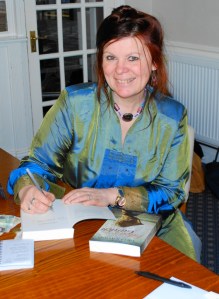 It was a really bad viral infection that left me with ME for years. Before then, I’d been energetic and healthy, holding down a career, cycling, rushing up mountains, and working for hours in my garden. Being so ill for so long, and not knowing if I would ever get better, forced me to completely reconsider my life. That’s when I decided I would work part time in a far less stressful job, and just go for my lifelong dream of being a writer. I’d never had the courage to do it before, in case I failed. Having ME made me realise I’d nothing to lose, so it gave me the courage to try.
Have you always been a story-teller with a love of the written word?
Definitely! As a child I used to devour books and write my own wild adventures and the only subject I ever wanted to study was English. In my twenties, I lived in a garret (well an attic room) in London, bashing away on a typewriter, sending stories out and finding them flying right back again. Then I did the sensible thing and found a ‘proper’ job and did a bit of living (the best kind of research). But I never quite lost sight of the dream.
You had established your work under the lovely name of Heather Pardoe, why did you decide to revert to your true name for novels?
I’m very fond of ‘Heather Pardoe’, but I’d always known I was going to write under two names. Writing stories and serials for magazines was a really valuable learning curve. I loved doing them, and had great fun with the novellas I wrote for the ‘My Weekly Story Collection’. But my novels are very different. The kind of story you write is a pact with your readers, which is why many authors write under several names. My Juliet Greenwood books aren’t dark, but they deal with much darker themes (like my heroine racing through the battlefields of WW1 in a beaten up ambulance, on a desperate rescue mission), so I’m very happy writing under two names. I definitely see them as two aspects of me, so when I sit down as Heather, it feels different than when I sit down as Juliet. Although Heather is my middle name, so my two writing personas are not that far apart…
Which author’s work have inspired you the most and why?
There are so many! As a child, the novels of Rosemary Sutcliffe gave me a passion for historical fiction. I love Elisabeth Gaskell, George Elliot and the Bronte’s for their portrayal of strong, passionate women trying to make sense of the world around them on their own terms, and I can never get enough of the twists and turns of Dickens’ plots.
I love the description you gave in one interview of your ‘crog loft’. I have just converted my garden shed – it does not quite have the same ring to it. How structured is your writing day/process? Are you a plotter or do you let the ideas grow organically through the story?
 My crog loft is tiny, but it’s nice and cosy and womb-like (and has steep stairs that stop me from sneaking out into the garden when I hit a tricky bit!). When I’m writing serials, I have to plot everything out, as there is no chance of going back and changing things. When I’m writing my novels, I start with a general idea of the plot, but I know that’s going to change as soon as I start, and find the heroine needs a mother, or a brother or best friend, who turns out to be far too interesting to ignore! I generally know the beginning and the end, but once the first draft is done and the real work begins, anything can happen. That’s the exciting, and the scary bit, because I’m never sure if it’s going to work. I love tightening up the plot, and developing the twists and the turns to (hopefully) keeping the readers on the edge of their seats. ‘Eden’s Garden’ was a real challenge, moving between the modern heroine and Victorian times, and keeping the two stories weaving in and out of each other while not giving the twists (especially the one no one ever spots!) away. ‘We That are Left’ had some of its structure dictated by the historical events of WW1, even though the action is focused mainly on the experience of the women and civilians at home. The next book is also based around historical events, but with some family twists and turns too.
You are a member of the Novelistas whose members include amongst others Trisha Ashley and Valerie-Anne Baglietto. How did you become involved with the group?
I’ve been meeting with the Novelistas for years. We all live in very rural parts of Wales and the North West, and writing is a lonely life, so it’s great to be able to meet up and support each other.
How important do you think it is for an author to be a part of a supportive group/organisation?
I feel it’s very important to be part of a supportive group of fellow writers. It’s like any specialism you feel passionate about – you need fellow geeks, and those going through the same experience, otherwise you can bore the socks off family and friends (after all, I’d glaze over if a stockbroker discussed the minutiae with me every day, even if I had some interest in getting rich quick!).
What would you say a reader can expect from a Juliet Greenwood novel?
 A big emotional story, set in a rambling old house in Cornwall or Snowdonia in Victorian or Edwardian times, with women firmly at the centre of the action, each making her own way towards self-fulfilment. There is a mystery to be solved, and danger to be overcome, and the path of true love definitely never runs smooth. There will be a garden in the background somewhere, and probably cake. For ‘We That are Left’ I researched authentic dishes from WW1 newspapers for my heroine to use, as she struggles to keep her family and the local village fed on limited resources, mainly anything she can grow in the kitchen garden on the family estate.
What are you currently working on?
I’ve just finished another serial, this time set among the paddle steamers of Conwy in Victorian times. I’m also deep into my next novel, which is a still a secret, but I can reveal that both cake and bricks are involved. And possibly a suffragette or two?
What is next for Juliet?
I’m looking forward to finishing my next book – especially as I’ve already got ideas I’m passionate about for the next one, or even two. The kindle editions of ‘We That are Left’ and ‘Eden’s Garden’ both reached the top five in the kindle store. I never expected it to happen, but it was such an exciting experience, I’m just itching for the chance for it to happen again. Writing is always a rollercoaster ride. Just watch this space…
More from Juliet
Website: http://www.julietgreenwood.co.uk/
Blog: http://julietgreenwoodauthor.wordpress.com/
Facebook: https://www.facebook.com/juliet.greenwood
Twitter: https://twitter.com/julietgreenwood
‘We That Are Left’, Honno Press, 2014
‘Eden’s Garden’, Honno Press, 2012


 valerie holmes, author