An Interview with Liesel Schwarz

LieselI am delighted to welcome Liesel Schwarz, Queen of Gothic Steampunk to my blog this month. I first came across Liesel’s work when I read her debut novel ‘A Conspiracy of Alchemists’, which is an action packed adventure described as “Combining the best elements of Gothic fiction with contemporary Steampunk”. It was chosen by Random House to launch their SFF imprint (Science Fiction and Fantasy) Del Rey in the UK.

Welcome, Liesel, and thank you for taking the time out to answer my questions.

To me the combination of history, invention, science, fantasy, romance and thrilling adventure is a magical blend – literally too, as it reveals a deadly game between Alchemists and Warlocks as the creatures of light and dark walk among us.

Hi. Thank you for inviting me!

How do you describe Gothic Steampunk?

That’s a question that requires a rather long and convoluted answer. I think steampunk, in broad terms, is the fascination with Victorian optimism. It concerns itself with technology and progress. The Victorians had this obsession with making the world a better place, by “civilising” it. We know today that much of what they did was deeply misguided, but I think their hearts were in the right place. Steampunk takes its cue from those intentions. Gothic romanticism is more about Victorian disillusionment. It is the 19th century’s nostalgia for the romantic ideals that originated in the Dark Ages. I’ve always been a fan of the 19th century Gothic literature and I love steampunk and so I thought it would be cool to create a world that was bright and technologically progressive on the one side while dark and organic on the other. Two sides of the same coin, but in direct opposition with the other. This is how Elle’s world came into being and so I suppose in a way this is why they described the books as Gothic Steampunk.

That’s a great description which captures the complex essence of the genre. When I read your first novel what struck me most was the energy and enthusiasm that came through the words on the page. Have you always been a natural story-teller?

I’m not so sure about the story telling part, but I do know that I have however always been a natural story maker-upper. Telling the stories you create in your head is, I think a natural progression in this case.

Where did your writing journey begin?

When I could hold a crayon. It took a few detours, and I decided to start writing more seriously after I left university but I think writers tend to be born that way. It is again a natural consequence of story maker-uppers.

How long did it take you to become a published author?

A few weeks! No, I’m serious. I was incredibly lucky. I met my agent, he sent my book out to market and I literally had a book deal a few weeks later. Before I met my agent, I did however spend years and years honing my craft. This involved writing stories, polishing them, having them rejected and then starting all over again. I also studied the craft of writing quite intensely. I have an MA in Creative Writing and I am also busy with my PhD on the subject.

Will you ever forget the moment when you were told yours would be the debut novel of Del Rey?

I think I was more excited by the mere fact that my book was going to be published, to be honest. The fact that it would be the debut for a new imprint only really registered with me a bit later. It’s great when you have a good relationship with your editor and publishers and again, I am extremely lucky in this respect.

There are many aspects to your novels. The research of actual inventions must be meticulous – but you have also blended in your own to make the fiction appear real and the impossible plausible. Have you always been drawn to this age of invention?

Yes. I think it started when I was very young. I remember watching films like Mary Poppins and Chitty Chitty Bang Bang and I found the sheer eccentricity of it all irresistible. This fascination grew as I started reading and it’s been with me ever since.

Do you have great fun spending many hours inventing your own machines on the page?

Actually, many of the machines I use in the books were actual patents filed in the British Library. I think the Victorians were far better at inventing fantastical machines than I could ever be. I think the reason for this is because there was an element of naivety about their inventions. Today, with all the marvels we have at our fingertips, we are a little jaded. Although, I suppose that in a hundred years from now, people will look at us and think, “Oh, how quaint!”

Elle Chance and Mr Marsh are strong characters who continue to develop. Do you have plans for the series to continue over many novels?

I think all characters must develop within a narrative. You can’t really have a story without that and so yes, I have further plans for Elle and Marsh. There will be a book 4 and a book 5 in the future.

Do you constantly jot down ideas for the next book as you work?

I must admit that I am quite bad at jotting things down. Or, I tend to jot things down and then forget about them. Ideas that are live and have potential tend to stick in my mind. They niggle away at me until I write them into a story. I do however carry a notebook with me at all times. I sometimes jot down bits of conversation I’ve overheard when I’m sitting in a coffee shop.

Elle travels widely – how do you research the many locations that your novels cover?

I like to travel and so the settings I use tend to be places I’ve visited. You have to place settings into historical context though and so I do a lot of research as well. I am particularly fond of old city maps. For example – the Cafe d’Enfer in Paris which appears in Sky Pirates really existed in the early 1900s. Today, it is a 1-Euro store (Pound/dollar store) but the doorway still exists. I find that fascinating.

What is next for Liesel?

Well, I have two short stories which will be appearing in anthologies next year and I am currently working on a standalone novel before continuing with the Chronicles of Light and Shadow – so keep watching this space.

More from Liesel

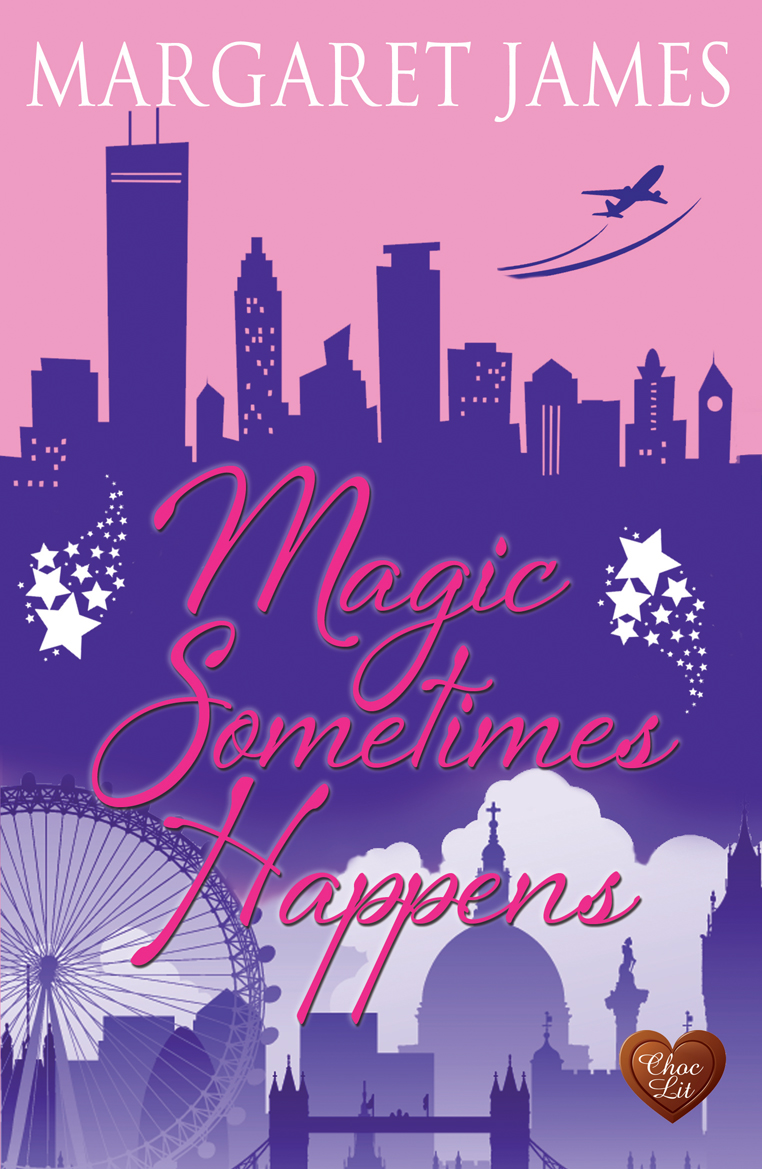
The inspirations for Magic Sometimes Happens

I am delighted to welcome Margaret James back to my blog as she tells us about her enchanting new book Magic Sometimes Happens!

Thank you for inviting me to be a guest on your blog, Valerie. It’s great to be here! Today, I’m going to tell you about the inspirations – music, poetry and places – for my latest novel, Magic Sometimes Happens.

The story is about second chances for both my hero and my heroine. My hero Patrick Riley is married, is the father of two small children and doesn’t expect his wife to leave him for a man she says makes her fly. My heroine Rosie Denham is running away from a bad mistake and needs to learn to forgive herself.

The story starts when Rosie visits Minnesota in the fall, a season which is probably the most beautiful time of year in one of America’s most beautiful states. The whole place seems to turn red and gold almost overnight as the trees change colour. But fall is a very short season. Minnesota’s long, harsh winter will soon be on its way, and the whole place will be frozen solid for almost six months until spring makes a brief appearance before the next sweltering summer comes around.

So yes, Minnesota has an extreme climate. But it’s place that is full of extremes. The Twin Cities of Minneapolis and Saint Paul are divided by the Mississippi River, which winds between limestone bluffs and through various locks and channels to join the Missouri before flowing on to the Gulf of Mexico. There are quiet, very beautiful stretches of river very close to the urban hearts of Minneapolis and Saint Paul. But some parts of the Twin Cities are very built up. Minneapolis is home to the Mall of America, the biggest shopping centre in the western world. But there are also hundreds of parks, lakes and playgrounds dotted between the buildings, and – in spite of the dozens of high-rise buildings and skyscrapers in downtown Minneapolis – the whole place has a countrified feel to it.

Most American schoolchildren are probably familiar with Henry Longfellow’s narrative poem, The Song of Hiawatha. It’s the story of a Native American warrior and his bride Minnehaha and it’s set in Minnesota. When you visit the Twin Cities, you can’t help but be aware of the influence of Longfellow on place names. You’ll come across Minnehaha Park, Hiawatha Avenue, the Hiawatha Clinic and many more. My fashion PR consultant heroine Rosie is a British girl who has never heard of Longfellow, but American-born Patrick knows long stretches of the poem by heart.

As for music – although Patrick is a professor of IT and very science-oriented, he is in love with music, especially American classical music by the likes of George Gershwin, Aaron Copland, Leonard Bernstein, Samuel Barber – Pat listens to them all. But his absolute favourite is Gershwin who wrote, among many other compositions, Rhapsody in Blue and An American in Paris. So, when Rosie takes him to Paris, Patrick can’t help but be enchanted and magic is surely bound to happen!

Maybe have a listen and see if you’re enchanted, too?

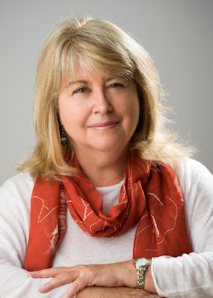
More from Margaret

Why not have a peek at her blog, or chat with her on Facebook and Twitter?

An Interview with Janet Gover

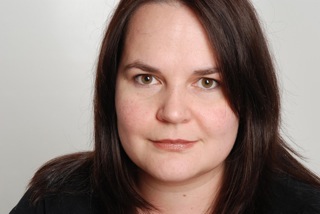
Janet Gover

My guest author this month is an experienced novelist, TV journalist, and short story writer, as well as an award-winning Australian author, Janet Gover. She has graciously taken time out of her busy, globe-trotting schedule to answer some of my questions and share her vast experience with us.
 
Welcome, Janet!

How did your childhood fuel your love of books, travel and adventure?

Hi Val – thanks for having me here on your blog.

I grew up in a tiny bush town in Queensland. There were only 18 buildings in Bowenville back then – I know this because I counted them. There was no-one else my age in the town, and my school was many miles away. I took a bus there each day – which meant I didn’t get to hang out with the other kids after school. Our nearest ‘big’ town was Toowoomba. It had movies and shops and things – but it was quite a drive to get there and we didn’t go often. I guess would have been lonely without my ponies and my books.

My Dad was a great reader and he taught me to love books as he did. It was such a great escape. I rode to the stars with Ray Bradbury, solved mysteries with Sherlock Holmes and fell in love with many a knight in shining armour.

Books were full of people and places that were such a long way from my tiny bush town. They fired my imagination. And the really great thing is – I have managed to visit some of those places I read about – although I have yet to go into space…

On January 10 2011 floods hit Brisbane and Toowoomba. Has Toowoomba changed greatly from the place you grew up in as a result of the devastation caused?

I was in Miami, Florida, working, when those floods hit. I woke up in the morning and turned on the TV news – and was shocked by the pictures I saw. It was so hard to understand how Toowoomba, a town on the top of a mountain could have a flood. I lived and worked in Brisbane as a young journalist, and that day in Miami I saw pictures of one of my favourite restaurants being washed away.

Floods are not uncommon in Australia – and people fight back. If you went there now, you wouldn’t know what had happened.

One of the things I am very proud of is my involvement with a book called 100 Stories For Queensland. I donated a short story to this project – as did many other writers. All the proceeds from sale of the book went to help flood victims. I was pleased to be able to help, even in such a small way.

You have written stories from an early age, but when did you make that initial breakthrough into print as a fiction writer?

I was a journalist for many years – working mostly in TV. I thought it would be easy to switch from writing fact to writing fiction – but I was very wrong. It was really hard.

I tried my hand at a novel when I was still working as a journalist – and it was really bad. Seriously bad! Some years later, I moved from being a journalist to a more managerial role – where I wasn’t writing daily news stories any more. Something inside me needs to write – and that’s when I seriously started to write fiction.  It took a while to change my style. My first efforts were rejected.

A holiday in Wales changed everything for me. I was very inspired by the places we visited – the fabulous scenery, the people and their history… the dragons.  I wrote a short story called The Last Dragon. It was my first published fiction (and I still love it).

I wrote short stories for a year or two – and each taught me something else about the art of writing. And every one that was published gave me a bit more confidence. My first novel, The Farmer Needs A Wife was published in 2009, and owes a lot to those short stories.

Janet, you travel widely with your work. Do you develop plots/characters for your novels as you journey, being inspired by new experiences?

I love people watching. Everywhere I go, I look and listen and learn. People are endlessly fascinating.

One thing I have learned in my travels is that whatever the cultural differences, deep down people all over the world want the same thing – they want to find someone to share their lives with. They want a home and a family. They want to give their children a good start in life. That’s why I write the sort of books I do.

I feel most comfortable writing about places I have been – I do like to properly capture the essence of a place. As I travel more, some of that is sneaking into my work. A boat cruise around the tip of Norway in mid-winter helped me to write Bring Me Sunshine. A trip to Iraq was the key to writing a troubled ex-serviceman as a hero. Living in New York has given me a heroine – we won’t meet her for two more books, but she is waiting there for me.

What places, of the many you have visited really stand out as memorable and why?

Wow – that’s a hard one. Very place has its own magic. Even though I write contemporary novels, I am a big history buff. I have visited the ruins of Carthage, of old Constantinople and Pompeii. I walked the Great Wall of China – I had a terrible cold at the time and pretty much collapsed at the end of the day, but loved it all the same. I love the ancient feel of places like this – and wonder a lot about the people who lived there.

The other thing I love is wild places – the central Australian desert, the Everglades. A frozen lake in Norway. The Rocky Mountains. Nature is beautiful and powerful…

And, I have to say – my favourite city in the world is London. I just love walking across Waterloo Bridge as the sun sets over the Thames. Beautiful!

What top tip would you give to new writers?

Be passionate about what you write. If you don’t love your story and your characters … no-one else is going to.

And respect your reader – never give them anything but the very best book you can write.

Flight to Coorah Creek, the first in a series based in the Australian outback is out in paperback this month. Could you tell us about this exiting new series?

Flight To Coorah Creek

I am loving writing about Coorah Creek. It’s a fictional town – in the far west of Queensland. Very close to the desert. In this series, I am trying to capture the feel of the small outback towns I have known all my life. These towns are a long way from the sort of amenities we are all used to. There are no shopping centres, or cinemas. Not much in the way of hospitals or schools either. Often, they hover on the brink of collapse. Coorah Creek is a mining town – if the mine was to close, the town would die.

People who live in these towns become very close to each other. They form very tight knit communities. The books are all romances – with new hero and heroine in each one. But the town and the people of the town appear in each book. It’s a chance to see the life the characters live when they move off the centre stage.

I hope to the readers, each new book will feel a little like coming home to a place you know well and to people you love.

By contrast Bring Me Sunshine was set in a much cooler environment. This was quite a change. Where did the inspiration for this story come from?

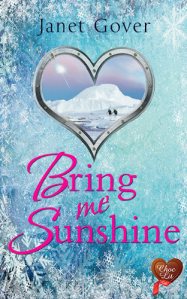
Bring Me Sunshine - small

Bring Me Sunshine is set in as wild a place as I could image – Antarctica. Well, on a cruise to Antarctica. The book was inspired by my sister-in-law – who went there with her mother… who at the time was well into her sixties. What a journey for a woman of her age!

I couldn’t afford to go there myself, but my sister-in-law helped with the research. I did take a cruise to the Arctic by way of research – which was a lot of fun.

I didn’t realise until after I had finished it – but this is the first (and so far only) book I have written that doesn’t have horses in it. There are, however, several million penguins – and who doesn’t like penguins?

It’s also the first (and so far only) book I have written with a wedding in it – which is a bit strange for a romance writer.

What is next for Janet?

I am almost finished writing the second Coorah Creek book – it has a lot of horses in it. And a fabulous hero who was inspired by a trip to Iraq.

There is a third Coorah Creek novel in the back of my head – a New York girl is just desperate to go and visit the town. But she’ll have to wait until I finish book two.

I am also planning another lighter novel – set on an archaeological dig…

And then there is this tropical island – where three sisters organise dream weddings…

And the story about the circus… (which will probably have horses in it too).

I’m not sure what order I’ll be writing these books in – one this is certain though – I am not about to run out of ideas…

More from Janet