The Laundry Maid’s Lye

I have just revisited the beautiful Georgian house and grounds of Beningbrough Hall, north of the ancient city of York. It was as I walked around the laundry in the grounds of the house, crossing through the archway of the bell-tower, that I created the heroine Miss Chloe Branton and Mr Tobias Poole.

The life of a laundry maid was hard. In the days before running hot and cold water, it had to be either hauled from a well or stream or pumped up from an underground source. Once they had the water they then had to heat it and use substances such as lye soap to soak, wash or scrub the garments, which was hard on the hands. Even the garments were more difficult to maintain as before modern textiles, dyes and methods of controlled cleaning the garments may have to be unpicked to separate delicate lace, from wool or silk and each section cleaned or washed separately. Materials were not colorfast and were often heavy. A careless laundry maid could cause shrinkage, pilling and ruin a garment and easily lose her already lowly position.

It was a hard life, but it was also an excellent place for someone to be hidden away for a short time. Chloe was unused to hard work, in a building with a cold stone-flagged floor, lifting heavy loads. She needed help and a good friend to survive.

The Captain’s Creek – Pressing Times

Maggie Chase discovers an injured stranger hiding between two rocks as he flees for his life on the beach. Rapidly, she is forced to make a choice: reveal his whereabouts to the fast approaching press gang, or hide him from their sight.

The Impress Service was set up to make sure that the Royal Navy had the needed number of sailors to man its ships. It was harsh and unfair as the press gangs were notorious for their raids, often ignoring the set age-limits of between 18-55, in an era when it was difficult to prove your age when plucked off the street.

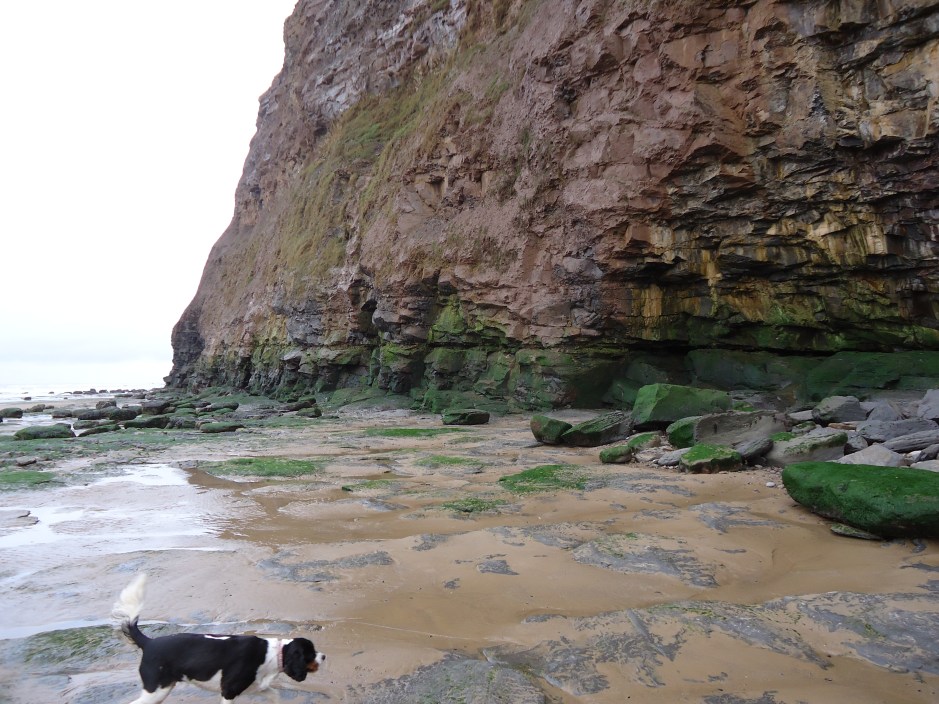
The coastal towns were rife with smuggling. Robin Hood’s Bay, for example, had a network of tunnels and passages linking the houses built on its steep banks. Although these were designed to move and hide contraband, they also proved useful when the press gang arrived. The womenfolk fought off the gang with anything they had to hand whilst their menfolk hid. They were a tough and hardy people, which is why the service wanted good seafaring men at a time when paid volunteers were not enough in number to fight Napoleon’s threat. Criminals who had chosen to serve a different type of sentence in the Royal Navy were often weakened by illness because of their previous incarceration. Therefore, the press gang swooped on the unsuspecting and gained a ruthless reputation as a result.

The eBook of The Captain’s Creek is available from Smashwords and Amazon directly or from most eBook sellers.

Abigail Moor – Biddy’s Bakery

Abigail was rescued as a baby by Lord Edmund Hammond – or so she believed.

Raised as a lady, calling him father, she enjoyed a sheltered life as she grew up and loved her step-brother, Frederick. Life dramatically changes because she has to flee from a forced marriage when Lord Hammond falls ill. With her lifelong maid she travels to the port of Whitby via the beautiful ancient city of York.

To Abigail’s naive eyes Whitby would have been a noisy, bustling place with a myriad of smells from the various industries surrounding the whaling, fishing and boat making industries. Even Abigail’s name, like her situation, has a double irony. Abigail literally means ‘my father’s joy’, yet she does not know who he is. The name is also used commonly to refer to a lady’s maid.

When I explored Whitby I came across a narrow snicket in which was a love old ram-shackled set of buildings I borrowed this setting for ‘Biddy’s Bakery’, placing it next to an old inn like the amazingly well restored White Horse and Griffin and took the extra liberty of placing a laundry opposite. Whitby was so wealthy through the whaling industry that in 1790 there were two street lamps in Church Street outside this original coaching inn.

I had the pleasure of staying in the same room that it is said Charles Dickens once used. It was a lovely friendly place in a fascinating location, and serves excellent food.

The eBook of Abigail Moor: The Darkest Dawn is available from Smashwords and Amazon directly for $2.99/£1.88 from most eBook sellers.

The Wonders of Whitby


Whitby is a place I love to explore. It has a fascinating history, some of which I would like to share with you, from the ruined abbey that dominates the headland, with the unique church of St Mary’s that leads you to the famous 199 steps and the town and harbour below.

The abbey was first settled by St Hilda when she opened the first monastery in 657 AD. Famed for her energy, commitment to learning, and her faith, life could not have been easy in such an exposed place. The original buildings have long since gone but the ruined stone remains of the abbey as it stands has been a symbol of the haven of the port for many a fisherman returning home.

The whaling industry made Whitby an important and lucrative port throughout the eighteenth century until 1830 when it collapsed because of the discovery of the cheaper, cleaner and more accessible paraffin oil. Throughout this successful period other industries flourished: ship building, sailing, fishing, tanning and one which came into popularity during the period of Queen Victoria’s mourning of Prince Albert, Whitby Jet.

James Cook was apprenticed to Captain John Walker in 1746 and served nine years. He went on to be the first European to successfully chart the East Coast of Australia and New Zealand. Walker’s house is now a museum to Cook.

I hope that has given you a flavour of this beautiful and atmospheric port on the northeast coast of England.

Further information