

Welcome, Evie!
When did your love of novels, especially of the romance genre, begin?
My love for novels began when I could read, so, age five. I fell into the romance genre in my mid-twenties when I was working and commuting very long hours and was very receptive to the escapism romance novels offered. I noticed that no matter how dramatic the novel, as long as I could rely on there being a happy ever after, I could just switch off for a few hours. I never looked back.
What is the attraction of the Victorian era that so appeals to you?
It was a time of great economic, social, and technological changes, which gave rise to social movements such as the women’s rights movement and the labour movement that we still benefit from today. It means I could write heroines who are authentic and plausible for the era all while I can still find myself relating to them 140 years later. In a way, it allows me to explore how far we have come, and which issues remain that some people have already tried to change for more than a century.
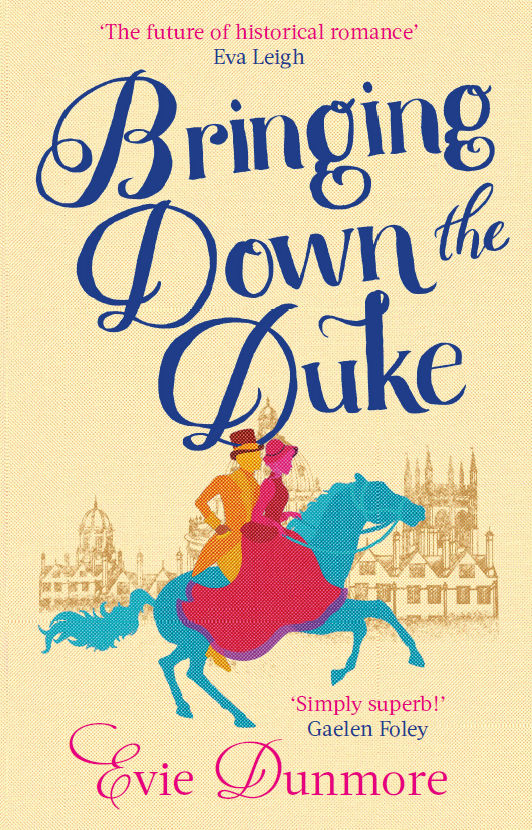
Bringing Down the Duke is the first engrossing novel in The League of Extraordinary Women series. The attraction between the two main characters is undeniable and absorbing. The protagonist attends Oxford against her family’s wishes, by being offered a scholarship from the Suffragettes. Is the series based upon the unsung heroines who paved the way for women today?
It is not based on any woman in particular but is certainly inspired by the first group of women students at Oxford and by the early suffragists, and their many allies whose names we will never know. The fight to access higher education took women decades; even after women had enrolled at Oxford for the first time in 1879, it should still take another 40 years before they could sit the same exams as the male students. The fight for women’s rights, especially the right to vote, was even longer, going back to the 18th century to Mary Wollstonecraft if you will. We hear quite a lot about the suffragettes, the militants of the Edwardian era, but countless women before them laid the groundwork for the charge and I loved learning more about them and their tactics while I wrote the novels.
Which three of the many ‘extraordinary women’ from the past do you admire the most and why?
Looking at the late Victorian era/early Edwardian era, it would be Annie Kenny, Christabel Pankhurst, and Cornelia Sorabji.
Annie Kenney was the only working-class suffragette to ever hold a leadership position in the suffragette movement after working her way from a Northern factory up to travelling the world and talking to heads of state for the cause. She was responsible for the incident that turned some suffragists militant and caused them to form the suffragette branch. She was also very likely bisexual. Her autobiography was fabulously insightful and stayed with me for a long time. She came across as incredibly loyal, brave, and funny.
Christabel was the strategic head and in some ways the heart of the suffragette movement. She held a law degree from Manchester University though as a woman she was not allowed to practice law at the time. What impresses me about her is the mix of both fanatic grit as well as level-headedness which she displayed for the entire duration of the movement.
Cornelia Sorabji was the first woman of colour and first female law student at Oxford University in 1889. When she arrived at Oxford, she already held a first-class degree from Bombay University, and she successfully fought tooth and nail to be treated like her fellow male students at Oxford. Back in India, she was not allowed to practice law for over a decade, but she found her own niche to assist women and girls in legal matters and had over 600 female legal wards and several successful pro-women social policies under her belt by the time she returned to Britain in her later years.
You have a personal connection to Oxford University having studied for a master’s degree there and an advanced creative writing course. From your experience, would you say that women academics have achieved equality there alongside their male counterparts?
A lot of brilliant women are hard at work at Oxford and fill important positions; since 2016, we even have a female Vice chancellor (Louise Richardson). My heroines would love to see it. However, personally I think female academics won’t achieve real equality in the workplace as long as they are compelled to choose between family and an academic career, or have to somehow juggle both, as this is something their male counterparts still don’t really have to worry about unless they are committed to fully sharing the care-work out of principle. The statistics still show a sharp drop in female academics from third year PhD to actual tenure, and we can already see that the pandemic disproportionally affected the output of female academics. Successful academic work requires you to think original thoughts and to write cutting-edge papers. It’s harder to do that amid years of sleep-deprivation and a mind loaded with other people’s needs and schedules. Without fathers stepping up or affordable external assistance, we’ll always have shining examples of some women having it all, but the overall statistics will probably continue to tell a different story.

How challenging was and how did you go about writing the perspective of Queen Victoria in Bringing Down the Duke?
I had read her letters to her acquaintances where she raged about women’s rights activists and called for them to be whipped. Her official stance was also anti-suffrage and minced no words. Her close friendship with Disraeli and her behind-the-scenes meddling in politics when she was younger, is also no secret. It therefore wasn’t challenging as I put words into her mouth she herself had either written down verbatim or were very much in the spirit of her position. I guess it helped that I always had her actual photographs before my mind’s eye rather than the TV version played by the lovely Jenna Coleman.
Did it surprise you that such a prominent female monarch did not support women’s rights?
Not really. The queen saw herself as set apart from regular humans, and the dividing line between progressive people and those who want to keep things as they are does not neatly run along gender lines, it never has. A lot of women back then felt more comfortable with upholding the structures that suppressed them and harnessed the narrowly defined power allocated to the role of mother and wife instead. And sometimes, women’s reasons to be anti-suffrage were simply due to clashes with their other interests. For example, the Royal Society for the Protection of Birds was founded and run by women in the late 19th century, and they were anti-suffrage. Why? Because the suffragists and later suffragettes continued to use plumes as accessories.
How have you kept mentally and physically fit during the recent pandemic?
Unfortunately, I didn’t do a good job on either front, so I’m afraid I have no valuable tips to share here…
When life returns to the new ‘normal’ what do you look forward to doing when not writing or researching?
I look forward to the brain fog lifting. An end to this limbo of being unable to plan anything with certainty, all while we can’t really be spontaneous, either. I look forward to not having to worry about schools shutting down again and how the kids are affected by the situation; or about loved ones falling ill. I’d love to ditch the mask, and to hop on a train or plane to see family and friends I haven’t seen in nearly two years. I would like to offer my readers an in-person book signing. And I want to go to the movies and eat popcorn and not flinch when someone in the row behind me coughs.

When and where did your affinity with Scotland begin?
I think it began when watching nature documentaries about the Highlands when I was a child. It was sealed when I moved to Britain and dated a mountaineer from St Andrews. The first time we entered Glen Coe around 15 years ago, it literally took my breath away. I felt moved to tears, it felt like coming home, when I had no prior connection to the place. Odd how that happens sometimes. Before the pandemic, I would regularly go up to Scotland a few times a year to stay with friends and to go hiking. Edinburgh is my favourite city in the world. I have been invited to RARE, a big romance author event, in Edinburgh in 2022, and I can’t wait to go and meet readers and colleagues.

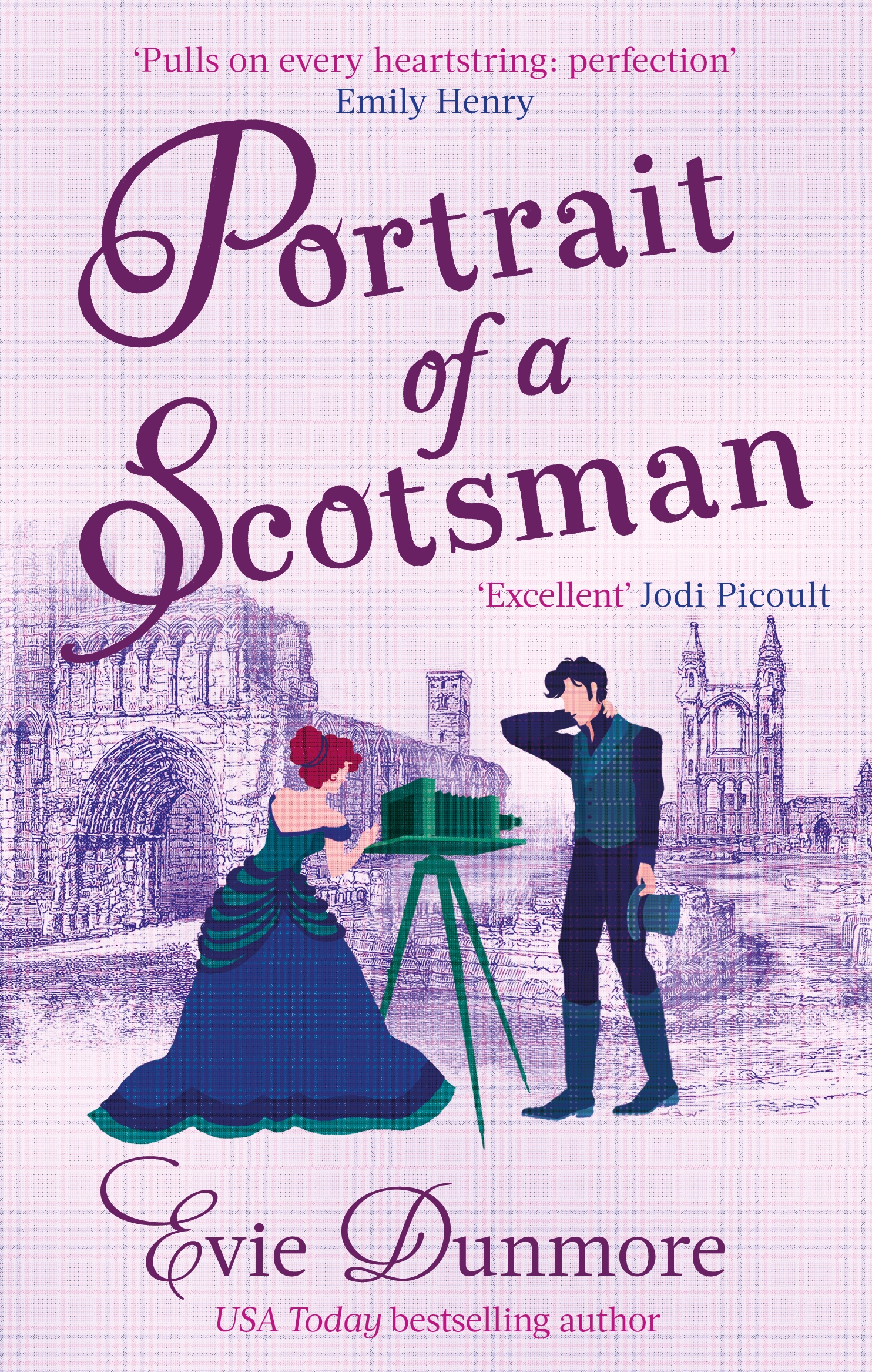
The Portrait of a Scotsman (Published 7th September) has a Scottish hero, when and where did the inspiration for this novel begin?
Inspiration for the story sparked during my research for my debut Bringing Down the Duke, where I came across photographs of Victorian women in trousers. The women in question were pit-brow lassies—they worked on the coalfields and frequently underground. Their existence was entirely at odds with the ideal Victorian image of women as the dainty Angels in the House, and I knew I wanted to highlight these remarkable women in one of the books in the series.
This, and my love for the Hades and Persephone myth, come together in the hero, Lucian Blackstone, a successful self-made Scotsman who he began his journey underground in a Scottish colliery.
What is next for Evie?
I’m currently trying to finish the fourth and final book in the series, and I for the last year I have been playing around with an idea for a fifth book. We’ll see what comes from that.
Thank you for taking time out of your busy schedule. I’m looking forward to reading Portrait of a Scotsman!
 valerie holmes, author