
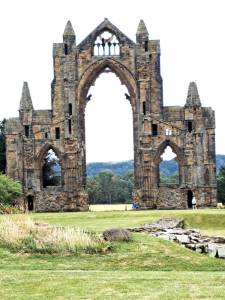
Gisborough Priory is cared for by English Heritage and a local charity, Gisborough Priory Project. Its peaceful presence situated on the edge of the busy market town of Guisborough (that is not a typo, the two names are different) offers an escape into a tranquil space.
The priory’s name originates from the Old Norse origin, whereas the town’s name derives from the Domesday book entry – the town of ‘Gighesbore’.
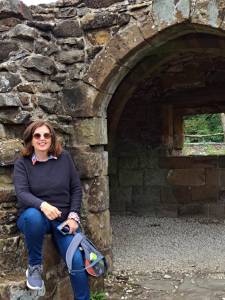
Stepping inside the well-tended grounds is like entering a timeless sanctuary that has been lovingly preserved, providing a place of peace and reflection. I was surprised and delighted that this free-to-enter space is obviously a much used and cared for relic from the past, yet it is accessible to travellers today.
The Augustinian priory of St Mary the Virgin was founded by Robert de Brus in 1119. Its success led to the establishment of Guisborough as a thriving market town. In 1540 the dissolution of the monasteries under Henry VIII’s reign ended the priory’s power and control.
In my novels and novellas I created the fictitious towns of Gorebeck and Beckton, which were strongly influenced by such beautiful Yorkshire market towns as Guisborough. In the period when the Napoleonic Wars (1803-1815) raged overseas taking many menfolk to enlist for the King’s shilling and also to serve in HMS Navy, either by choice or pressgang, the lives of their families and loved ones were deeply affected back home. Trade was disrupted, taxes were high leading to smuggling – which was rife in the area, the costs of farming and grain rose, and of course men were away at war. Unrest, fear and tough times would be the reality for the many, whilst the landed gentry and ‘new money’ were still the relatively few who thrived in the country.
My stories reflect some of the issues of the day and the struggles that a country in the midst of war and social, industrial and religious change faced.
In Silent Revenge, Lord Farrington, a returning officer for Lord Wellington is asked by the Home Office to gather intelligence on local insurgents, lest uprisings happen in England like they did in France.
Goods, legal and contraband were brought to market vis such ancient routes as The Quaker’s Causeway, an ancient trod dating back to monastic times when Gisborough Priory was connected to Commondale.

“Parthena looked at her and decided to tell the truth — almost. “I walked over the old trods from Gorebeck to Beckton. I was at the Abbey School as a child and crossed the moors when the supplies were taken to market. I’d remembered it from back then. The school does not exist now, but the trods have existed for centuries.”
Parthena’s story is told in For Richer, For Poorer, published by @SapereBooks as part of The Yorkshire Saga Series

The beautiful gardens of the priory with the ancient woodland reflect the transition through time, since it was bought by Sir Thomas Chaloner after its dissolution, whilst preserving what remains of this once great priory. The dramatic east wall with its impressive high arch, a 14th century dovecote, a vaulted under-croft, and the original gatehouse still stand proud.
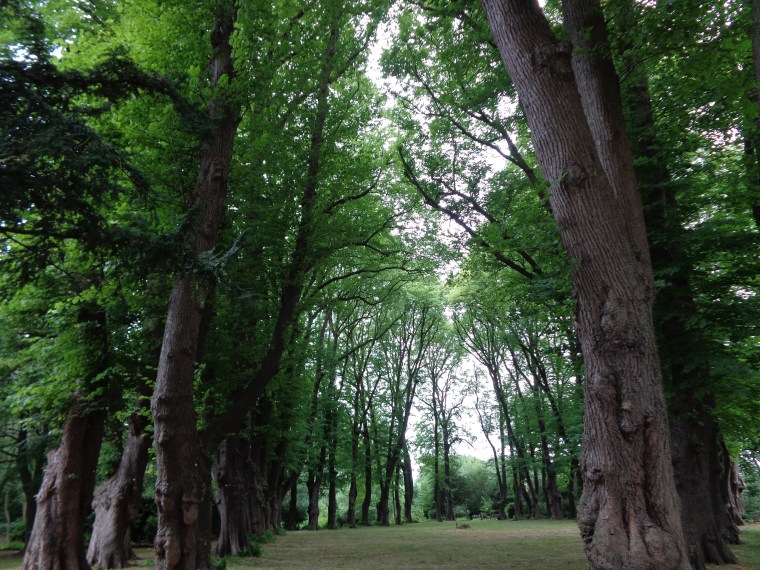
The Monk’s Walk, through aligned lime trees, has a particularly peaceful aura to it. Whether a visitor is interested in the history or not it certainly offers a step away from hustle and bustle to a calmer and more reflective space.

Whatever you are doing this weekend I hope you find a good book to enjoy. If that includes choosing a Regency Romantic Adventure set in the beauty of North Yorkshire click here now!
If you want to visit Gisborough Priory to experience it for yourself then they are open 10am to 4pm Wednesday to Sunday – plus Bank Holidays, March to November.
Have a brilliant weekend!
 valerie holmes, author